Search Results: b (2704)

Letters a-nice-day-for-playing-hockey_allen-sapp
8

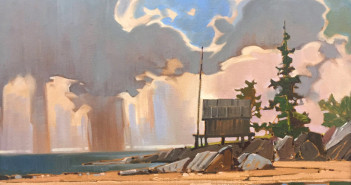
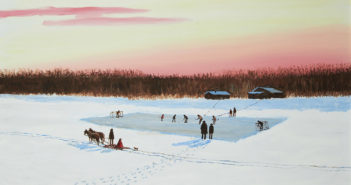
Allen Sapp, one of Canada’s most collected aboriginal painters, was given encouragement and support in his youth by a young doctor who believed in him. He was supplied with burnt sienna, ultramarine blue, yellow ochre, black and white. Allen worked with this palette for some time before he found there were others available. Today, forty years later, his color range is still modest, but his imagination is great. I think that the remarkable strength of his painting is at least partly due to the self-training that took place under this early limitation.
Letters ross-penhall_phoenix_park
21

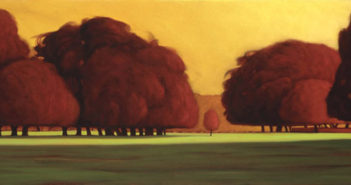
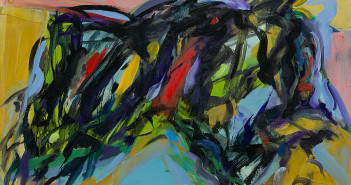
My friend Ross was a firefighter for nearly three decades before retiring a few years ago to paint full time. He says riding the city streets for countless hours on a fire truck gave him not only a thorough look at the district but also a special perspective. After a shift of two days and nights at the firehall, he’d spend two days in the studio making art. This cocktail of co-operation and teamwork spiked with solo, creative problem-solving became his life. The studio time, he says, was a way to quietly debrief the life-and-death emergencies of firefighting.

Letters elaine-de-kooning
24

It’s a matter of getting an olive into your martini from across the bar. According to the handbook for “extreme bartending,” this sort of performance excites clients, alleviates boredom, speeds consumption, and sells liquor. Recently, while witnessing an example of extreme teriyaki, I was reaching for the wasabi when a flaming cleaver landed dangerously close to my hand. In any case, the next morning I had to have my suit dry-cleaned

Letters Robert-Genn_Mamalilicoola
39

A small painting was brought into a gallery under a woman’s arm. “My ex bought it at an estate auction,” she said. “It’s mine now, but I’d like to sell.” The dealer had represented the artist for many years, so was familiar with his paintings. Formerly, they came to him direct from the easel. More recently, they arrived once in a while, like this one — by way of custodians ready to pass along the provenance. To this dealer, the artist’s larches and firs, sky flicks and French greys had been burned onto the back of his eyelids. And the calligraphic name, laid-in lower right like clockwork, was the signature move

Letters roloff-beny
13

I used to know a photographer by the name of Roloff Beny. Roloff was responsible for a dozen big-format coffee table books. Persia, Bridge of Turquoise was well known, as well as his famous To Every Thing There is a Season. Roloff picked an area and went through it thoroughly. A friend of the Shah of Iran, he once took a red-carpeted year to travel that country in his Land Rover. Roloff generally arose before dawn and was already set up at first light. The midday sun found him asleep in the FWD. I never did figure out where or when his faithful driver slept. As evening and the “magic hour” approached, Roloff was back on the job. “As an artist you should be in business until the time when you almost can’t see,” he used to say. A few years ago he met an untimely end in his bathtub in Rome

Letters Skwachays-Lodge_Poem-Suite-501_Art-Detail
14

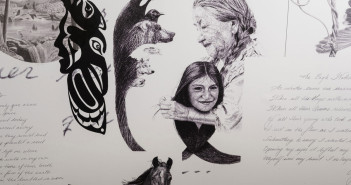
My hometown of Vancouver serves as a gateway to some of the  remote hearts of Canada’s First Nations communities. The city could be seen as merely a pass-through for purpose-driven travellers, artists and historians en route to the islands and forests of her ancestral peoples. Vancouver’s neighbourhoods-in-transition seem to be invisible. For urban dwellers, the contributions and struggles of many First Nations are noticeable most often in the form of polished, re-contextualized objects of art sold on Gallery Row or can be seen as breathtaking exhibits on the other side of town in the Museum of Anthropology

Letters egon-schiele_seated-woman-in-violet-stockings-1917
49

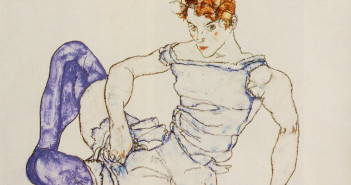
Anyone who takes a lingering look at the work of Egon Schiele can’t help but be impressed. A brief, bright star in Austrian art (he died in a flu epidemic in 1918, age 28), his drawings, his painted drawings, and his drawn paintings are electrifying. Depraved subject matter aside, his is a line to behold.

Egon’s markers move slowly and intelligently, often nervously toward description. His form-follows-function lines are an education. An understanding of anatomy is combined with the sensibility of Art Nouveau. Bones morph, flesh purples and becomes visceral. Line holds colour in place. Expression is often understated

Letters UNSPECIFIED - CIRCA 1950:  Photo of Nina Simone  Photo by Tom Copi/Michael Ochs Archives/Getty Images
16

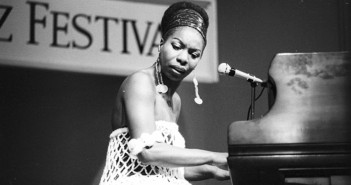
In times like these, artists may examine their role as grabbers of attention, sources of information or providers of comfort and hope. Some find it impossible to separate a creative voice from one that reveals truth and engages action. Some wouldn’t dream of separating art from activism.

In the 2015 documentary “What Happened, Miss Simone?” director Liz Garbus unpacks the story of 3-year-old Eunice Waymon, a classical piano prodigy in Tyron, North Carolina. The sixth child of a Methodist preacher, Eunice performed at revivals and walked across town to study Bach at her piano teacher’s house. By nineteen, she’d made it to New York but

Letters Winslow-Homer_Boys-in-a-Pasture
33

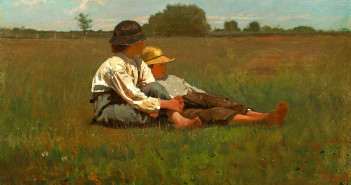
A subscriber wrote, “I know by experience that art-making is a conduit to something higher than workaday life — but I’m finding it harder and harder to overcome depression about the low status of my day job and the low status of visual artists. It’s not just that painters are viewed with some contempt; increasingly, our work just isn’t viewed at all. Look at the entertainment section of any newspaper. It will have articles on just about every other art form but painting. It seems that painting is terminally ill or dead. At age 42, I have the typical dream

Letters Cory-Trepanier_Glacierside
9

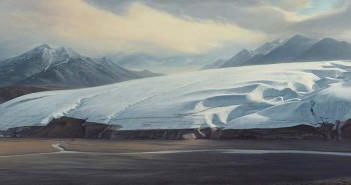
Painting on location is an event. One begins with the idea of where to go and then takes the trouble to get into that spot. Once there, gear is set up and brushes dipped with the knowledge that light and temperature are fickle and fleeting co-conspirators. A special kind of grit is gained from the entire ceremony — accidents and frustrations mix with the thrill of the unknown. From the corner of one’s own garden to the planet’s most pristine crags, a location waits to be painted. With location work, we’re rewarded with unrepeatable moments and wisdom — the resulting paintings but a record of a larger devotion to the natural world

1 107 108 109 110 111 271