
Dear Artist,
All my life I’ve been trying to figure out ways to improve my painting. That includes study of the work of those I consider masters, trying to get the hang of their ideas, techniques and processes, and, on my own part, simple, garden-variety toil. Over the past twenty years or so, I’ve built up a word list that has been gradually added to and subtracted from. At one point the words actually added up to 365. I called them “Keys.” They could be both negative and positive. They might be everyday common sense and they might be personal preferences. They pop up mainly while painting, afterwards when vetting my work, and often when I’m walking in the woods with Dorothy. These words remind me where I am, what pitfalls I’ve fallen into on previous occasions, what I am doing wrong right now and, from time to time, what I might be doing right.
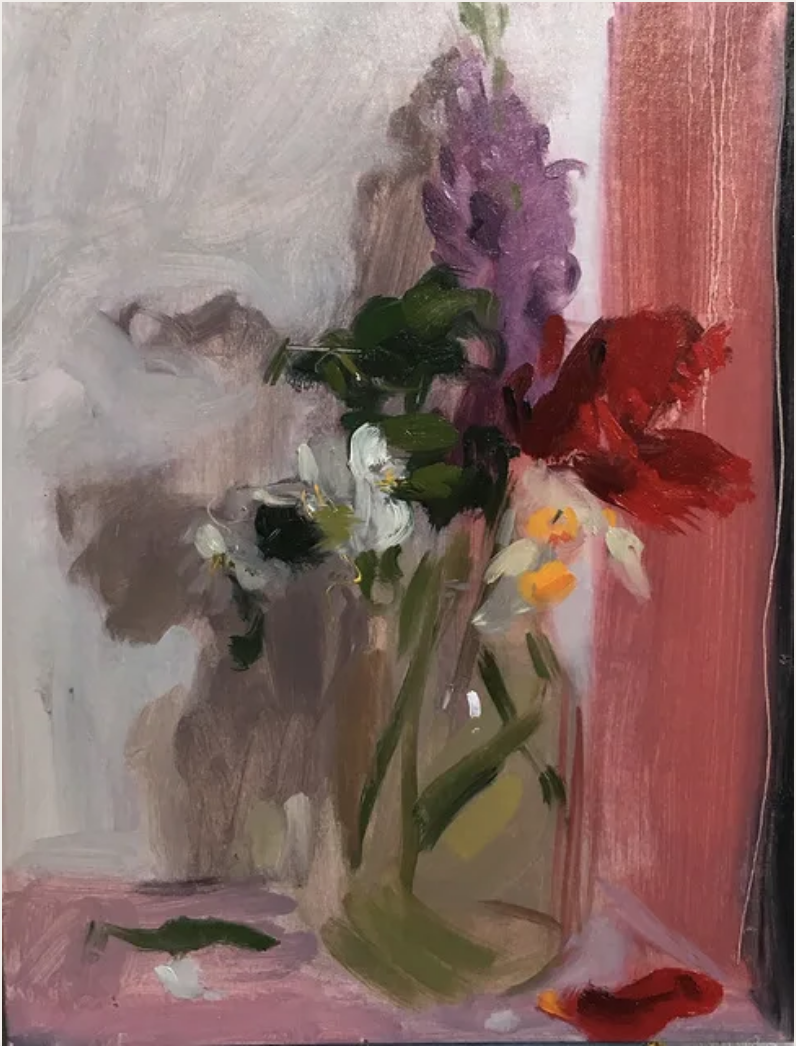
Daffodil, Tulip and Hyacinth, 2018
Oil on board
35 x 28 cm
by Serena Rowe (b. 1977)
You may have heard of the concept of “name it and claim it.” When you identify something that’s going on — a method, a technique, an attitude — and put a name to it, a natural human tendency is to hang on to it and to more readily make it your own. Naming often nails down a situation. In my occasional forays into mentoring and workshopping, I also found myself encouraging painters to build lists for themselves — lists that might reflect their own techniques and tastes. Inevitably, I had to explain some items in my own list.
An alphabetical list that might encourage thought and the building of your own lists can be found after the letter. You might find some on my list to be self-contradictory, but that’s the nature of the beast. While anyone can paint, it’s difficult to paint well. If it were easy to paint well, perhaps everyone would be doing it. Our work is also complicated by the fact that we often don’t know what glue we’re in until we’re already into it. A life in art seems to be forever a work in progress. If you catch my drift, you may find that your own words and phrases will pop up and down like a whack-a-mole. As the lady said, “How do I know what I think until I hear what I say?”
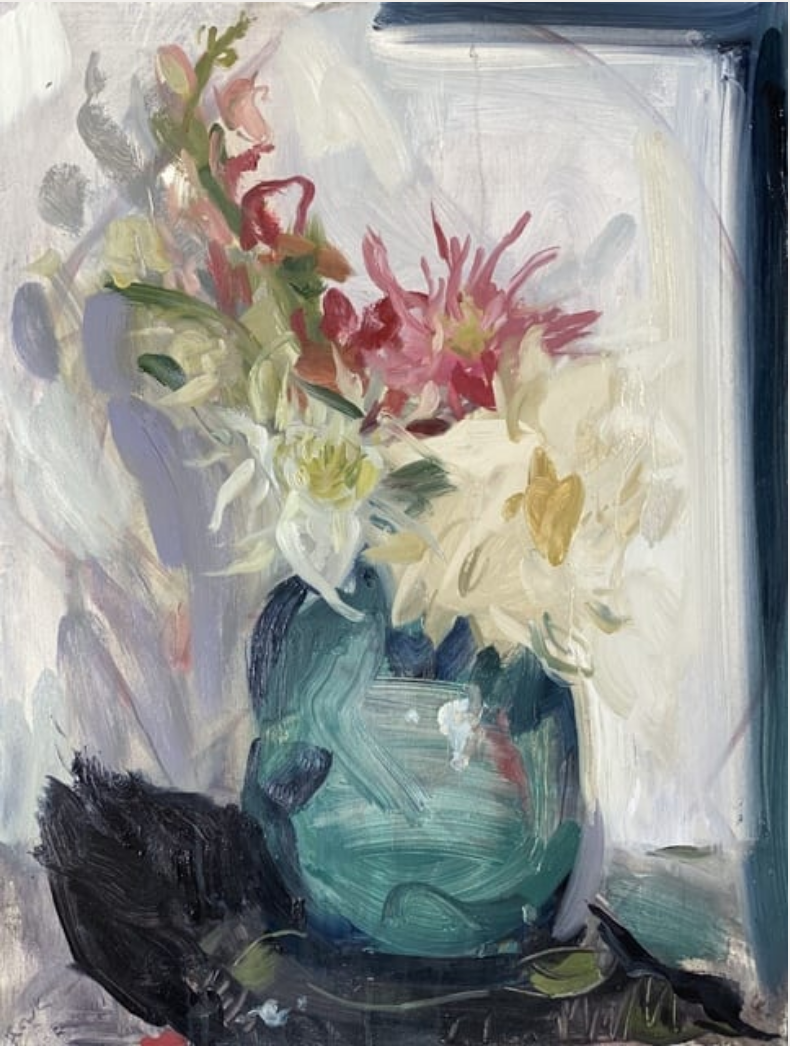
Dahlia, Dahlia, Gladioli 2019
Oil on board
60.5 x 46 cm
by Serena Rowe
Best regards,
Robert
PS: “My own words take me by surprise and teach me what to think.” (French philosopher Maurice Merleau-Ponty, 1908-1961)
Esoterica: I recently printed out and ran my list past a group of artists in a two-hour Q and A. The participants seemed to be stimulated, and some great discussions arose. Some participants have continued to fire off input by email. Without completely throwing away the mystery of it all, I’ve added a short explanation after each key. “A word,” said Ludwig Wittgenstein, “is a struck note on the keyboard of the imagination.” It’s my sincere wish that your imagination might at least be teased. It’s also my hope that from my list you get a few ideas for your own list.

Reaching, 2021
Oil on board
59 x 41.5 cm
by Serena Rowe
365 Words and Phrases
Abstract core — abstraction strengthening realism
Activation — magic spots that direct the eye
Arial perspective — going back easy
Art schooly — some march to a different drum
Avoidance activity — the thief of productivity
Bee-action — brushwork like a bee at flowers
Big picture — broad design trumps fiddling
Blocked — some artists simply are
Box canyon — places you can’t get out of
Bravura — confident, flamboyant brushwork
Broom and whisk — brush size for style
Butterfly mind — your key to imagination
Chair and feet — hat on and how you work
Chiaroscuro — form by light and shade
Cigar time — civilized, reflective self-crit
Circulation — moving the eye around a work
Clientosis — too much attention to customer
Colour surprise — unexpected pictorial focus
Coming to light — basic principle of life
Commit and correct — a creative principle
Condition — What’s happening in there?
Constipation — creative tightening up
Counterpoint — the secondary leitmotif
Defocus — softening up for mystique
Desire — the world’s greatest power
Distractive creativity — gifted subconscious flow
Edgemanship — know your edges
Educosis — work blinded by education
Ego-force — the power that billows your sails
Eye control — management of the viewer’s eyes
Faxification — imited range of tonal values
Flow — automatic right-brain painting
Focus — here’s the climax?
Form — when all else fails
Glaze down — toning a painting for mother colour
Grace notes — extra nuances for added interest
Gradations and flats — main ways of treating areas
Grey power — sophisticated, delicious neutrals
Guilt — the thief of power
Half-closed eyes — the way to really see
Hard and soft — the two buddies of joy
Homeostasis — the creeping crime of equality
Horizontality — the alpha of back and forth
Infectious dilettantism — good enough is okay
Interlocking patterns — hidden design strength
Iron will — the power to overcome
Joy stroke — where visual happiness prevails
Kitch and callow — beginner’s potholes
Leave out — subtraction as creative ploy
Leave out a primary — a winning colour device
Limited palette — less is more
Literary entrapment — the “red” barn
Lost and found — the music of disappearances
Low expectations — aim low and hit the mark
Magic hour — a great time to paint
Mishmash — a work of too many subjects
Mother colour — chosen colour pervading all
Nap time — the shut down that reboots
Overworking — the boo-boo of perfectionists
Painterly senility — watch for it as you age
Paucity — absence of; key to pictorial charm
Photographosis — photo dependence; it shows
Pink focus — noses and elbows; a convention
Plein air cure — the advent of authenticity
Point system — every work has its points
Pomodoro — the tomato of time
Pump priming — methods of getting started
Put more into it — adding without cluttering
Rebrushification — change brushes; often up
Reflected light — the gentle lift that reads
Scumble — dragging a lighter colour over
Secondary easel — a change of personality
Squeeze out — first thing in the morning
Stringy and thready — a terminal danger
Studiothrombosis — art and you can die of this
Style alert — triggering the advent of style
Surface quality — the work you love to cruise
Syncopation — boogie-woogie energy
Syntagma — similar forms montaging
Talk back — let the painting speak to you
Three four five — stepping back well into
Three sixty — rotate your view
Time inversion — slow work that looks quick
Toil — the professional’s secret weapon
Too one two — a simplistic work
Toolitis — the reliance on tools
Verticality — the power of up and down
Volume — the benefits of making many
What could be? — the golden question
Zips and flourishes — Final focus fun
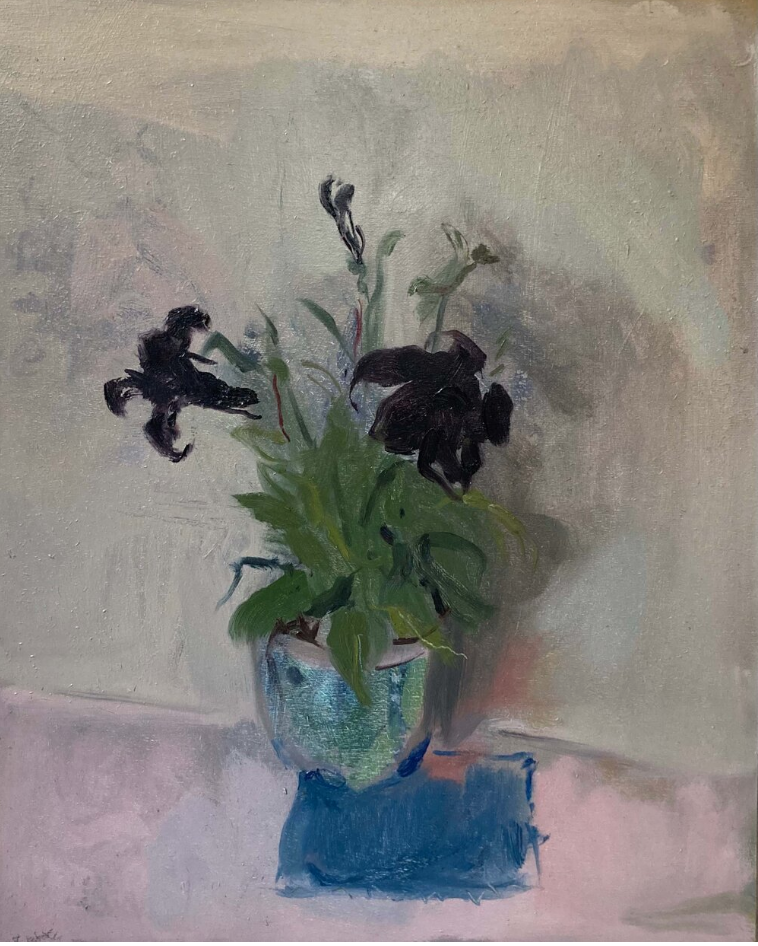
Black Petunia, 2021
Oil on board
40 x 55 cm
by Serena Rowe
This letter was originally published as “365 words and phrases” on October 11, 2013.
Have you considered a Premium Artist Listing? With each letter, an artist is featured at the bottom of this page. The Premium Artist Listings are a means of connecting artist subscribers through their work. Proceeds from each listing contribute to the production of The Painter’s Keys.
“A word after a word after a word is power.” (Margaret Atwood)
Featured Workshop
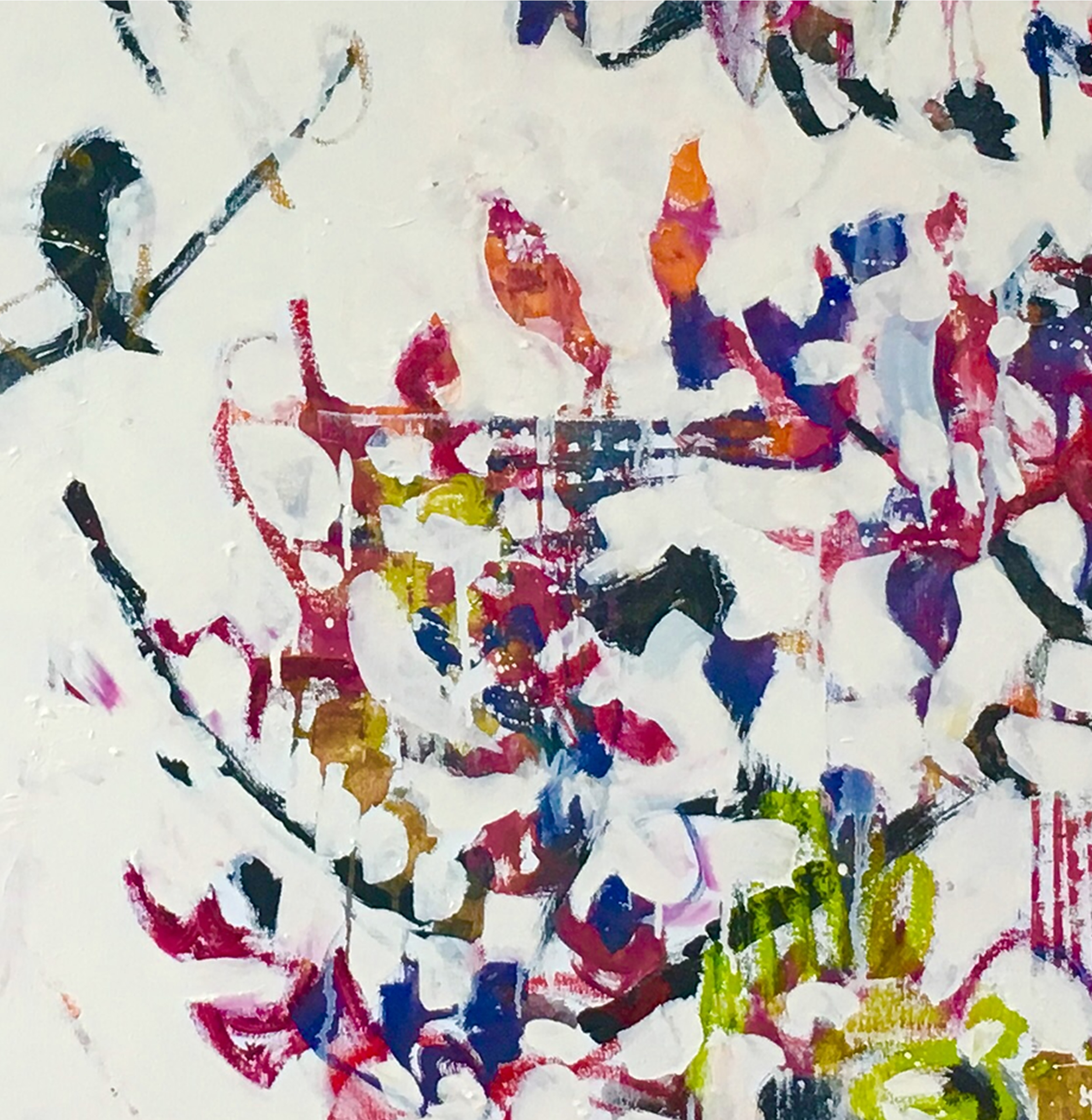 Join Ellie Harold for “Intuitive Painting: Permission to Paint Expressively,” designed especially for mature women artists of all skill levels who wish to explore this medium for soulful exploration. The retreat provides attractive accommodations (your own room!) along with lightly structured activities for centering, relaxation and low stress art-making. You’ll have plenty of free time to muse, paint, write and reflect while enjoying the colors, textures and flavors of San Miguel. This Retreat has the potential to transform not only your art but your life! You’ll return home with a specific art “care plan” to assure support for further creating. Details at www.EllieHarold.com.
 Melanie Islet, Desolation Sound
acrylic on panel
24 x 30 inches
Featured Artist
Shawn’s paintings evoke the feelings of the West Coast, its shores and islands, ponds and lakes.


253 Comments
Interesting, I could relate to several. Thank you Sara. As I read I was wondering to myself if your dad had formal art education? A post with insight on him would be interesting to many, I think.
I was just thinking this morning before I read this of the word “ambiguous.”
Two that resonate the most with me these days are ‘box canyon’, where I find myself frequently, and ‘grace note’, which often gets me out of the box canyon…
This is so refreshing! Just the idea of effectively expanding your vocabulary is worthy of attention.
It really should be ‘trending’, but unfortunately the opposite seems to be the case.
We seem to be living in a time when the Journalism, Marketing and Politician communities have reduced their vocabularies to a bare minimum while constantly employing an ever-increasingly irritating group of ‘generic’ terms to describe or respond to whatever topic may be at hand. It shows an appalling lack of imagination. And articulation.
Politicians, and others, for example, now appear to have only two possible choices of words to describe their feelings about absolutely everything. They are either “disappointed” or they are “excited”. That’s it. Disappointed or excited.
Meanwhile, the latest word to appear in every conceivable setting from the weather to the pandemic to policy? Impact. The days of ‘consequences’ or being ‘affected’ are evidently over. We now have ‘impacted’ and ‘impactful’. Here’s my list of words and terms that all appear constantly, despite their being vague, meaningless or just wrong……
Going forward. Moving forward. Loved ones. Family and friends. Friends and family. Iconic. Epic. And yes…Canadians.
And “That’s a great question!” Every time anyone asks a question of a politician, panelist, or whomever, that’s the response. Really? Are they all GREAT questions?
The words that make me smile are those ending with with “itis” and “osis”…implying that there may be cure for these if we stay true to ourselves and practice opening doors of painting using these and our own “painter’s keys.” One of mine is Emotionality – be sensitivity and passionate at the same time. Thank you for this letter.
Nap time — the shut down that reboots
for me it is
Bath Time—the shut down that reboots
I couldn’t possibly expand on this list. Love them all, they go from wise to practical to inspiring, to down right chuckle worthy… like “rebrushification”.. hahahahaha Love it!
Meanwhile, the latest word to appear in every conceivable setting from the weather to the pandemic to policy? Impact. The days of ‘consequences’ or being ‘affected’ are evidently over. We now have ‘impacted’ and ‘impactful’. Here’s my list of words and terms that all appear constantly, despite their being vague, meaningless or just wrong……
Fantastic letter, very impactful.
I am thankful to you for providing both the information and the ideas that I requested. I will make an attempt to comprehend it more completely so that I may proceed.
It would appear that politicians and other individuals, for example, have only two alternative words to choose from when attempting to express their emotions over everything and everything. Depending on the situation, they are either “disappointed” or “excited.” And that’s it. Either dissatisfied or optimistic.
level devil
Thank you for sharing this list of so many beautiful words! Pomodoro is my favorite one (both word and food)! :)
I just wanted to let you know that I just looked at your io games website and found it to be very interesting and helpful
Who would’ve thought that a browser game like Fireboy And Watergirl could be so engaging and addictive?
This article on creative prompts is truly inspiring! It’s fascinating how seemingly simple concepts like the Pomodoro technique or exploring reflected light can unlock new artistic pathways. I especially appreciated the reminder about avoiding Studiothrombosis; taking breaks is crucial. papa’s games need rest too! Thanks for sharing.
What a wonderfully thoughtful collection of ‘Keys’—each word feels like a gentle nudge back to creativity, technique, and self-discovery. The concept of naming those painting quirks and traps is truly inspiring. If this post had a profile, it certainly wouldn’t be некрасивый профиль—it’s rich, meaningful, and beautifully crafted.
Wide, open areas allow for extended Drift Hunters slides and huge multipliers, while technical mountain passes reward precision and control.
“Really interesting—I enjoyed it a lot!”
These 365 words and phrases provide us with amazing ideas we can use. I got information about Sydney Roof Cleaning Pros and their services are the best to use.
I really enjoyed reading this! The way you’ve shared your insights makes it easy to understand and follow along. It’s both informative and engaging, and I appreciate the effort you put into creating such a useful post. Thanks for sharing!
Thank you very much! More power
I also found myself encouraging painters to build lists for themselves — lists that might reflect their own techniques and tastes. Inevitably, I had to explain some items in my own list the baby in yellow free.
Thank you so much! Wishing you continued success!
3utools
Wide, open areas allow for long Drift Hunters slides and massive multipliers, while tight mountain passes reward precision and control.
I deeply appreciate you sharing that with me; your input is genuinely valuable and helps me immensely. Thank you so much for taking the time and effort!
The level editor transforms geometry dash from a simple platformer into a limitless creative tool. Players build environments, sync every obstacle to music, and design artistic effects
Don’t have time to download? UB Games has you covered with quick, addictive browser games!
[Wenda Treatment](https://wendatreatment.com) combines eerie melodies with gripping narratives for a truly immersive dark musical experience.
This is a beautifully reflective piece on the lifelong process of learning, self-awareness, and refinement in art. The idea of using “keys” as reminders feels both practical and deeply personal much like how a Naples Chiropractor focuses on mindful adjustments over time to support balance, alignment, and continued progress rather than a single, quick fix.
Seeing the list of 365 words, I felt inspired. It’s like TextideoAI turns ideas into viral content, and Robert’s words do the same for art. While sipping coffee, I thought, could I create my own list? It’s a bit challenging but exciting.
I love how Dinosaur Game transforms an internet error into entertainment, turning a frustrating moment into an addictive experience filled with challenge and excitement!
Recently used free online photo collage maker to create a quick travel photo collage — no signup, super easy. Might be useful for anyone doing social content!
Highly recommend this awesome disposable email tool: Temp email. It generates a temp address in seconds—use it and toss it. Great for signups and verifications while keeping your inbox safe from spam!
This is a beautifully reflective piece that captures the lifelong journey of learning, self-awareness, and artistic refinement.
Webcric Live
The 365 words list is quite intriguing. I found myself nodding along with entries like butterfly mind and bravura, feeling like I was walking in the woods with Dorothy. It’s like a casual chat over coffee, making you wonder how these words will shape your next painting session.
Thanks for sharing your personal development book list! I’ve also read ‘The 4-Hour Workweek’ and it really changed how I think about work. ‘Rich Dad Poor Dad’ is a classic for financial education too.
GamiCool turns ideas into playable games in seconds with Gemini 3-no code needed. Ai game, esse Hennes do Colônia é incrível, já viu? No metro, li sobre ele e pensei, uau, oito animais desde 1950. E pensar que ainda mora no zoológico, que legal!
That’s fascinating. Let me see all the details!
I love the idea of a personal keyword list for creative focus. It reminds me of how naming a style can help you own it.
It’s an amazing article providing valuable insights, keep doing the great work.
mobile cricket
Wordle unlmited versions are ideal for fans who don’t want to wait 24 hours for a new puzzle and prefer continuous gameplay.
The snow day predictor calculator is a helpful and fun tool that estimates the chances of school closures based on weather conditions, making winter planning much easier.
Seeing the words Activation and Bravura really got me thinking about AI Music. It’s like finding a hidden gem while scrolling through my feed. The idea of Generate AI songs using Lyria 3 instantly feels so innovative, doesn’t it?
I also found myself encouraging painters to create their own lists—ones that reflect their individual techniques and personal tastes. Inevitably, I had to clarify a few items from my own list as well.
https://magistvapk.cl/
I wanted to drop a quick note to say thank you for this post. I’ve been struggling to wrap my head around this specific topic for a while, but your explanation finally made it click for me. The way you broke everything down was incredibly clear and easy to follow. It’s rare to find content that is both technical and accessible, so I really appreciate the effort you put into this. Keep up the great work!
This is honestly one of the most helpful articles I’ve read on this subject in a long time. You managed to cover all the important details without making it feel overwhelming, which is a hard balance to strike. I’ve actually bookmarked this page so I can come back and reference it later when I need a refresher. Thanks so much for sharing your expertise with us—it saved me a lot of research time!
I’m new to painting, but the idea of keeping a personal list of “keys” to reflect on techniques and habits sounds like a great way to grow over time. Seeing works like Daffodil, Tulip and Hyacinth by Serena Rowe also reminds me how much patience and self-reflection art requires. That steady improvement feels similar to fnf where the Boyfriend keeps battling new opponents to prove himself and win the heart of Girlfriend.
This really resonated with me. The idea of building a personal list of “Keys”—both positive and negative—over decades of practice is such a powerful concept. It’s a reminder that growth is a slow, deliberate accumulation of insights, not just a single breakthrough. As someone who works with character design, I’ve started my own list of visual and narrative “keys” that help me push past creative blocks.
Your point about the list being a mix of “everyday common sense” and deeper principles is spot on. Sometimes the simplest reminder is the most powerful tool. I find a similar process helps when I’m using an original character creator; having a mental checklist of core traits, conflicts, and visual motifs makes the creative flow so much smoother. Thanks for sharing this wonderful approach.
This really resonated with me. The idea of building a personal list of “Keys”—words that can be both positive and negative reminders—is such a practical and profound tool. It’s a form of deliberate practice that goes beyond simple toil, which you mentioned. It reminds me of how we approach strategy in the games I enjoy; you have to internalize core concepts before they become second nature.
I run a site where we try to do something similar, breaking down complex game mechanics into essential guides and principles for players. It’s a constant process of refinement, much like your word list. If you’re ever curious about that kind of applied learning in a different context, we have a ton of resources at our Anime Tactical Simulator wiki. Thanks for sharing this thoughtful process—it’s inspiring for any creative or analytical endeavor.
This really resonated with me. I love the idea of a curated, evolving list of “Keys” to guide your practice. It’s so much more personal and effective than just following generic advice. It reminds me of how I approach other interests, like gaming. For instance, when I’m trying to master a game’s mechanics, I find that having a central, well-organized resource for strategies and updates is invaluable. It’s similar to your word list—a personal toolkit. I often rely on a clean hub for current King Legacy codes and fruit guides to streamline that process. Thanks for sharing this thoughtful approach to creative growth.
Robert, your list is a treasure trove. I particularly resonated with “Plein air cure” and how getting out into the world reboots the creative system. I’ve been exploring how different geographical locations impact my own creative “flow”—it’s fascinating how some cities seem to unlock a specific kind of “Bravura” while others lead to “Studiothrombosis.” I recently used an Astrocartography Chart to map out my personal creative hotspots, and the alignment between my past travels and these energy lines was uncanny. It’s a great tool for anyone feeling “Blocked” and looking for a change of scenery.
Brat Generator Online – Create custom brat-style text images in seconds.
Ai Photo Enhancer helps you improve photo quality online with one click.
AI Image Editor Pro – Advanced AI-powered photo editing tool online.
Image to Image AI provides a simple drag-and-drop interface that lets anyone generate high-resolution, AI-enhanced images in seconds.
The idea of curating a word list that gradually reaches 365 entries really resonates with me—it reminds me of building vocabulary in any craft, where each term becomes a building block for better work. I appreciate how the artist emphasizes both studying masters and putting in deliberate practice, which aligns with what makes tools like this tool valuable for tracking and refining one’s creative process over time.
You are having amazing ideas that work to provide us details on how we can learn more about the 365 words and phrases and get instant results. Many innovative ideas we can try to see how it can help us. So I try using pole barn packages South Carolina to see how it can benefit me and provide the desired results.
This is genuinely one of the most useful articles I’ve come across on this topic in quite a while. It covers all the key points thoroughly without feeling overwhelming, which isn’t easy to achieve. I’ve even bookmarked it so I can revisit it whenever I need a quick refresher. Thanks for sharing your knowledge—it really saved me a lot of time and effort!
Crictime
The addictive unlimited drifting game Drift Boss combines simplicity and difficulty! Learn one-tap drifting on limitless platforms and difficult twists. Explore this endless racing adventure and enjoy the thrill of exact timing as you drift through turns and pursue high scores with intuitive controls and demanding gameplay.
I’ve been trying wirdle and it’s a fun little word puzzle to pass the time. It’s simple, addictive, and great for sharpening your thinking and vocabulary skills!
qwordle
It’s fascinating that you spent twenty years curating a list of 365 words and phrases — that kind of intentional vocabulary building must translate directly to more precise, confident brushwork. I’ve been pairing traditional painting practice with tools like this resource to generate 3D references that speed up my own study of form and light.
This is such a comprehensive collection of words and phrases — incredibly useful for anyone looking to expand their vocabulary and communication skills. I found myself bookmarking several entries to revisit later, especially for professional writing. For creative professionals seeking new tools, ai-3d-model-generator.com offers excellent 3D model generation that pairs well with detailed visual storytelling. Thank you for putting this together! I also found ai-3d-model-generator.com really helpful.
Building a personalized vocabulary list over decades really shows how intentional study shapes artistic growth; I’ve found that the Fruit Love Island tool helps me organize reference phrases the same way, making it easier to revisit key ideas while I paint.
Building a curated word list over twenty years is a smart way to systematize artistic growth, and it’s a reminder that progress often comes from tracking the language we use to describe our craft. That kind of structured reflection is exactly why I’m a regular visitor to samaudiolab.com for insights on refining both technical skill and creative voice.
My Telenor app provides instant results by simply answering five multiple-choice questions. While other apps don’t provide immediate rewards for merely solving the five multiple-choice questions, they offer to stay for a while and watch ads, and don’t give MBs.
There are no fees or other restrictions. You have to access the app, answer the question, and submit it. After this, you can get free rewards in a few minutes. https://telenorquiztodays.pk/
Spend Secret Nights with Sofiya Khan
MapQuest Driving Directions is a free online map and directions service that allows users to search for detailed routes, optimize stops, and receive real-time traffic updates in the United States and Canada.
The concept of “Plein air cure” really hit home for me. Robert mentioned how getting out into the woods with Dorothy helps reboot the creative system. I’ve personally found that it’s not just about being outdoors, but where specifically we are that shifts our perspective. Sometimes a different city or a specific coastline can unlock a sense of “Bravura” that felt stuck back home. I’ve been using tools like an Astrocartography Chart to figure out which locations naturally align with my creative flow, and the results have been eerily accurate for my last two retreats.
This exploration of artistic vocabulary is fascinating, and while these “Keys” are excellent prompts for painters, I wonder if a similar structured approach to visual generation, like what’s offered by seedance 2.0, could offer artists new avenues for discovering these very same “words.” It’s inspiring to see how naming and categorizing aspects of the creative process can be so powerful.
This artist’s approach to building a personal vocabulary for painting is brilliant, and I found myself particularly drawn to the idea of “naming and claiming” creative moments, much like how one might personalize their expressive zalo style sticker; it’s a fascinating parallel in finding precise language for abstract concepts.
Love the unique selection of words here! They really encapsulate different emotions in art. Also, have you considered how language shapes our perception of creativity? It’s fascinating!
I benefited greatly from your blog post while making my holiday plans. Thanks to the information you provided, I was able to make more informed decisions and my holiday was much more enjoyable..
https://www.rizetours.com/
The idea of using a curated list of “Keys” to vet your own creative output is such a fascinating way to bridge the gap between intuition and technical discipline. It reminds me of how we use specific symbols to ground ourselves in meaning; for instance, I often look at Tattoo Meanings to find the right terminology for a concept before it’s even visualized. Your process of adding and subtracting words over twenty years suggests that your “vocabulary” of mistakes and successes is actually a living, breathing part of your studio practice. I’ve found that having those specific, non-negotiable descriptors—whether they are about light, composition, or emotional weight—prevents that “aimless” feeling when you’re halfway through a piece and lose your direction. Do you find that these words ever conflict with each other during a single session, or do they generally work in harmony to guide the brush?
The idea of having a personal “word list” to vet your own work is such a fascinating way to bridge the gap between intuition and technical execution. I particularly liked your point about how these keys can be both positive and negative; it’s easy to focus only on what we are doing wrong, but using specific vocabulary to recognize what is actually working can be just as vital for growth. I often find myself doing something similar when I’m analyzing spatial compositions or color palettes. I actually found a similar perspective on AI Interior Lab that complements this well, especially regarding how specific descriptors help refine a visual vision. It’s almost like building a mental compass that prevents you from getting lost in the “toil” you mentioned. Do you find that these words change as your style evolves, or do the core “keys” stay relatively consistent over the decades?
The idea of using a curated list of “Keys” to audit your own creative process is such a practical way to handle the self-doubt that inevitably creeps in during a long project. I particularly resonated with the mention of these words popping up during walks in the woods; it’s often in those moments of idle movement, away from the canvas, that the subconscious finally sorts through the technical mess we’ve made. I’ve found that having a vocabulary for my mistakes helps prevent them from feeling like failures and instead turns them into specific technical hurdles to clear. It reminds me of how I use pattern recognition when I’m playing Mahjong Solitaire CC to stay focused on the larger structure rather than getting lost in individual tiles. Do you find that your list has shifted significantly in tone over the last twenty years, or do the core “positive” keys remain relatively constant even as your technique evolves?
The idea of using a curated list of “Keys” to navigate the pitfalls of the creative process is such a practical way to approach self-correction. I particularly resonated with the notion that these words surface during mundane moments, like walking in the woods, rather than just while sitting at the easel. It suggests that our subconscious is constantly processing technique and intent even when we aren’t actively working. I’ve tried to implement similar reflective habits to track my own progress, and I found a similar perspective on OrbitDash that complements this well regarding how structured feedback can sharpen focus. Do you find that these words change as your style evolves, or do the core “Keys” remain relatively constant throughout your twenty years of painting? It seems like a living document that grows alongside the artist.
The idea of using a specific vocabulary to audit your own creative process is fascinating, especially the way you mention these “Keys” appearing during mundane moments like walking in the woods. It suggests that the subconscious is constantly processing technical decisions even when we aren’t standing in front of a canvas. I’ve often found that labeling a specific feeling or error helps prevent it from becoming a permanent habit. I actually stumbled upon a similar approach to tracking personal progress and patterns on OrbitDash that helped me stay more mindful of my own repetitive tendencies. Do you find that your list has become more abstract over the years, or do you still rely heavily on concrete, technical terms to guide your hand? It seems like a wonderful way to bridge the gap between instinct and intentionality.
The idea of using a curated list of “Keys” to navigate the creative process is such a fascinating way to bridge the gap between technical skill and intuition. I particularly resonated with the mention of how these words pop up during walks in the woods or while vetting finished work; it suggests that the subconscious is often working on the problem long after the brush is put down. It reminds me of how people often look for specific Tattoo Meanings to anchor a visual symbol to a personal truth or a lesson learned. In a way, your 365 words act as a personal lexicon for your growth, much like how a symbol can represent a life milestone. Do you find that certain words become more dominant during specific seasons of your life, or does the list remain a relatively stable compass regardless of the subject matter you are painting?
The idea of using a specific vocabulary to vet your own creative output is fascinating, especially the way you mention these “Keys” appearing during walks in the woods. It strikes me that much of our best problem-solving happens when we aren’t even sitting at the easel, but rather when our subconscious is allowed to wander. I’ve often found that identifying a specific feeling or technical error—like “overworked” or “too clinical”—is the only way to actually fix it. I actually found a similar perspective on FrontWars.io regarding how defining specific tactical patterns can help improve performance, and it applies to art just as much as strategy. Do you find that your list has shifted significantly in tone as your style has evolved over the last twenty years, or are the core “negative” pitfalls you encounter still largely the same? It seems like a very disciplined way to bridge the gap between intuition and technical execution.
The idea of using a curated list of “Keys” to navigate the creative process is such a fascinating way to bridge the gap between technical skill and intuition. I particularly resonated with your mention of how these words surface while walking in the woods or during the vetting process; it suggests that creativity isn’t just about the time spent at the easel, but about how we process our environment. I’ve often found that when I’m stuck in a creative rut, it’s because I’ve lost the vocabulary to describe what’s actually missing from my work. I actually found a similar perspective on lily lovebraids that complements this well, specifically regarding how identifying specific patterns can help break through mental blocks. Do you find that your list is becoming more specialized over time, or do you intentionally keep it broad to allow for those “garden-variety” moments of discovery? It seems like a living document that grows alongside your maturity as an artist.
This was such a fascinating and thought-provoking collection because it feels less like a strict guide to painting and more like a map of an artist’s inner dialogue. The “365 words and phrases” idea is brilliant app para sacar marca de agua because it captures something many painters experience but rarely describe clearly
What stands out most is how these phrases balance technical advice with psychological insight. Many art discussions focus heavily on materials or technique, but this collection deixar foto 4k recognizes that painting is equally about mindset, observation, confidence, patience, and self-awareness.
The idea of maintaining a personal vocabulary of “keys” to navigate the creative process is such a practical way to handle the self-doubt that inevitably creeps in during a long project. I’ve often found that when I’m stuck, it isn’t a lack of technical skill holding me back, but rather a failure to name the specific feeling or direction I’m missing. Your mention of these words popping up while walking in the woods resonates deeply; there is something about being away from the canvas that allows the subconscious to finally categorize those technical pitfalls. I actually used a similar reflective approach when exploring visual concepts through myink ai to help articulate exactly what I wanted a design to convey. It’s fascinating how much our progress depends on that bridge between a vague intuition and a concrete word. Do you find that your list has shifted significantly in tone as your style has evolved over the last twenty years?
Snaptroid is designed to improve overall mobile interaction through responsive performance and stable usability. It allows users to enjoy a comfortable and organized environment for daily activities.
It’s interesting how you note that ‘a life in art seems to be forever a work in progress.’ I find that this deeply resonates with the creative process in general, not just painting. It’s a constant evolution, much like how the article describes building and refining a word list.
It’s interesting how you note that ‘a life in art seems to be forever a work in progress.’ I find that this deeply resonates with the creative process in general, not just painting. It’s a constant evolution, much like how the article describes building and refining a word list I found this especially useful.!
This was useful. SailorPiece has been a handy reference for Roblox anime-game codes and progression notes.
This blog series is engaging, with well-structured articles that highlight key points effectively. The organized approach to sharing content is impressive. I look forward to reading more of your work.
I really appreciate how this reflection highlights the profound impact of daily creative practices on our lives, proving that transforming your routine can be just as beautifully striking as choosing decorative concrete driveways brisbane homeowners use to completely revitalize their properties.
Paper Banana: Publication-Ready Academic for jotting down similar notes,
There is something humbling about going back to the masters every few years. Even the same painting hits differently after another season of work. Nice to see the phrase collection sitting alongside the studio practice.
This was clear and easy to follow on “365 words and phrases”. The part about about us the letters premium artist listings workshops art shows books subscribe art quotes you are at:home»letters»365… was useful. Cat Gatekeeper may help readers who want a concise reference afterward.
Interesting collection of phrases here. It’s funny how certain industries end up with their own vocabulary over time and people inside the field forget that homeowners or customers may not know what the terms mean at all. We see that happen a lot with outdoor and property-related work too. McKinney Tree Service
I love studying the masters too! When I find a technique I want to save, I use Convert HTML to URL to turn my notes into a shareable link. It’s super handy for keeping all those ideas organized.
This is exactly the kind of technical analysis I’ve been looking for! The way you break down complex concepts into digestible pieces is a real talent. Also recently discovered https://ernie-image.app/ for AI image work — highly recommend!
An SSO ID (Single Sign-On ID) is a secure digital login system that allows users to easily access multiple online services using a single account. It saves time, enhances security, and eliminates the hassle of remembering multiple passwords, thereby ensuring a more convenient and efficient digital experience.
What a wonderfully practical and poetic approach to growth in painting. The idea of curating a personal “key” list—words that serve as both compass and mirror—resonates deeply. It reminds me that creative practice isn’t just about adding new techniques, but about refining our awareness of what already exists in our process. I’ve found that naming a recurring struggle (like “overworking” or “hesitation”) often dissolves its power. Your suggestion to build individual lists is generous, and I’m curious how others’ lists might differ from yours. For anyone looking to explore more resources on creative habits and structured thinking, the RoboLibrary Start Page offers a wealth of starting points. Thank you for sharing such a thoughtful and human method—it’s a reminder that art thrives on both intention and reflection.
This was a fascinating and inspiring read. I love the idea of creating a personal collection of words and phrases that act as creative reminders and guideposts. Many of the entries are both practical and thought-provoking, encouraging artists to reflect on their habits, techniques, and mindset. The concept of “naming” common challenges and successes in the creative process makes them easier to recognize and learn from. Thank you for sharing such a unique perspective on artistic growth and lifelong learning.
What an inspiring collection of words and phrases! Language has an incredible power to spark creativity, shape perspective, and motivate artists in their journey. This list offers valuable insights and serves as a wonderful reminder of the many ways words can influence artistic expression. Thank you for sharing such enriching content. Greetings from Azinova Technologies.!
What a beautifully practical and poetic approach to developing as a painter. The idea of curating a personal “key” list—words that act as both a compass and a mirror—feels especially meaningful and deeply resonant.Copa Mundial de la FIFA 2026 en directo
Great reminder of how words shape perception and creativity. A useful read for anyone working with language or ideas.
Great write-up — I bookmarked matrix for reference on matrix.
nice i loved it thanks you so much
thank you buddy that help me a lot thanks you.
Your ideas about the 365 words and phrases are so good, and we can learn more here to get our issues resolved easily. To find the specialized roof treatment when I visit here it brings the desired solutions.
These 365 words and phrases are amazing and I like that you are sharing the best solutions for us. When I try to use the pole barn kits Memphis TN it brings the desired solutions. We are here to find the ideas and you are sharing what is needed.
Strong piece. Saving it. While I’m in the comments: BulkImagen
for anyone here who creates content and wants their image workflow to stop being the slow part. One prompt, batch of images. That’s it. Highly recommend.
These 365 words and phrases are amazing https://dino3d.games/
Looking for an effective way https://www.youtube.com/watch?v=q2ETN_3MwsA
An artist shares a personal list of “Keys” developed over years to improve painting, reflect on mistakes, and guide creative practice.
With ezpassma, explore creative painting techniques, artistic principles, and inspiring ideas that help artists improve their skills through observation, practice, and thoughtful expression.
I really like the idea of building a personal collection of words and phrases that guide your creative process, because it shows that artistic growth often comes from small reminders rather than big breakthroughs. Having your own set of principles makes it easier to reflect, improve, and stay inspired over time, and that thoughtful approach to creativity is something I also appreciate when exploring simple, engaging ideas on Planse-Colorat.com.
I’ve been trying to find my own Escape Road 2 away from muscle cramps while running, and lowering the arms makes total sense.
Good perspective. I found matrix destiny relevant when reading about matrix destiny.
This idea of building a personal word list to “nail down” a creative situation is brilliant and really resonates with my own practice. I often find that experimenting with different prompts, like a Harry Potter AI song generator, helps me discover new descriptive “keys” that I can add to my own vocabulary. It’s all about finding those specific notes that strike a chord in our own imagination, just as Wittgenstein suggested!
DailyUpdate.pk is an online platform that publishes the latest news, informative articles, and practical guides on topics that matter to everyday readers. The website covers a wide range of categories, including technology, education, government schemes, business, finance, health, and lifestyle. Its goal is to provide accurate, easy-to-understand, and regularly updated information in one place.
What a wonderful resource — 365 words and phrases to spark a year of creative reflection is exactly the kind of gentle prompt every painter needs on the days the studio feels stuck. Robert Genn’s legacy of thoughtful encouragement really lives on here. I’ve bookmarked this to revisit whenever inspiration runs dry. Thank you for keeping this community going!
With ezpassma, explore creative painting techniques, fundamental artistic principles, and inspiring ideas designed to help artists refine their skills through observation, consistent practice, and thoughtful self-expression.
The mention of “box canyon” really hit home for me—I’ve been stuck in that loop trying to decide between a 65-inch and 75-inch TV for my living room, and the specs just blur together. I ended up plugging the numbers into Screensizecomparison to see the actual size difference on screen, which helped cut through the ambiguity.
Me encantó la idea de reunir tantas palabras y conceptos para estimular la creatividad. Es una forma muy práctica de reflexionar sobre el proceso artístico y descubrir nuevas perspectivas. Incluso cuando hago una pausa para revisar resultados de loteria nacional, siempre encuentro tiempo para leer publicaciones inspiradoras como esta. Gracias por compartir una visión tan útil y motivadora para los artistas.
Artistic consistency requires an incredible amount of dedication, much like maintaining focus across demanding digital projects. While staying creative daily is challenging, leveraging precise, streamlined calculation systems like a Snow Day tomorrow helps keep schedule planning structured and efficient. Thanks for sharing this perspective on daily routines.
Great words and sharings!
We all need such a spirit power to encourage ourself.
Great words and sharings!
We all need such a spirit power to encourage ourself.
I think you are right, its a great story for us.
It encourages me to be true to my mind.
I love the idea of building a personal word list. ‘Nap time — the shut down that reboots’ is my favorite; stepping away often clears my head. Thank you for sharing these keys.
Firstly, we have been in this business for 11 years and we already understand how clients want their services to be done and the quality of products that is highly needed in the market. We offer Top Stealth Discreet Delivery which means our customers privacy and confidentiality is highly respected and safe from any unwanted party. With us you have a Full Money-Back Guarantee incase you’re cancelling your order or you’re not satisfied with your purchase.
This is such a thoughtful approach—I love the idea of distilling hard-won painting insights into a single word or phrase. Having a curated “Key” list you can revisit, almost like a personal creative compass, sounds incredibly grounding. It reminds me how much the right mental shorthand can streamline decision-making. For product shots, I’ve found that a similar kind of visual shorthand helps too, which is why I lean on ai product photography for ecommerce to quickly strip away background noise and let the subject speak. Thanks for sharing this process—it’s genuinely inspiring.
My Telenor app provides instant results by simply answering five multiple-choice questions. While other apps don’t provide immediate rewards for merely solving the five multiple-choice questions, they offer to stay for a while and watch ads, and don’t give MBs.
There are no fees or other restrictions. You have to access the app, answer the question, and submit it. After this, you can get free rewards in a few minutes. https://todaymytelenoranswer.pk/
Thank you for sharing these inspiring words. We all need this kind of inner strength to encourage ourselves and keep moving forward. I completely agree—it’s a wonderful story with a meaningful message. It has inspired me to stay true to my values and trust my own path.Slideshare PPT Download
At 2:37 AM, with your tracking page frozen on “Out for Delivery” and panic setting in, uniuni customer service can feel unreachable because their support operates within limited hours. Their call centers are open Monday through Saturday, 10 am to 9 pm EST, so middle-of-the-night queries will go unanswered until morning.
I like the idea of keeping a running list of “Keys” that can be both positive and negative, especially after twenty years of refining it. The part about learning from masters while still relying on “simple, garden-variety toil” feels very true to painting; I’ve also found resources like Oil Painting Portrait helpful when thinking about portrait work and process.
I like the idea of building a living list of “Keys” over twenty years, especially that they could be both negative and positive. The bit about ending up with exactly 365 words really stuck with me, because it makes the list feel like a year-long toolkit rather than a fixed theory. For a related planning approach, I found Creative Brief Matrix for Motion Control (4 Templates + Zorq useful.
The idea of building a living list of 365 “Keys” over twenty years is compelling, especially since you treat the words as both negative and positive influences on the work. I also like that the list grew out of real study and toil rather than theory alone; related reference on portrait handling here: Oil Painting Portrait.
I liked the idea of building a list of 365 “Keys” and letting them be both negative and positive—there’s something useful about treating ordinary words as tools for painting. The part about studying masters while also doing “garden-variety toil” felt especially true. As a related resource, Kling AI Tutorial: How to Use Kling AI Step by Step might be useful for readers exploring step-by-step creative tools.
The idea of keeping a living list of “Keys” that can be both negative and positive really stuck with me, especially the way you tied it to twenty years of study and painting. I also liked the thought that ordinary words can become tools for seeing differently; related to that, Kling AI Tutorial: How to Use Kling AI Step by Step has a clear step-by-step approach that might appeal to readers interested in structured learning.
The idea of keeping a living list of “Keys” that can be both positive and negative really resonates with me, especially the way you tied it to the slow work of improving painting over time. I also liked the sense that ordinary words can become practical tools; if anyone’s interested in creative process and experimentation, Kling AI Tutorial: How to Use Kling AI Step by Step is a relevant resource to explore alongside this.
I like the idea of keeping a living list of “Keys” that grows and gets trimmed over time; that feels more useful than a fixed set of rules. The mix of positive and negative prompts is especially interesting, and it reminds me of how language can shape visual thinking too, which is part of what we explore at AIイラスト生成 で、言葉からイラストを.
I like the idea of keeping a living list of “Keys” that can be added to or subtracted from over time, especially since you mention it once reached 365 words. The balance of positive and negative prompts feels useful for painting practice, and for anyone working on portraits, Oil Painting Portrait is a relevant resource to look at alongside that kind of study.
I like the idea of “Keys” being both positive and negative, especially because painting progress often comes from study of masters and plain toil at the same time. The ordered reading idea in this Comic Translator Comic Translator that reads tiers in order feels related to that kind of step-by-step looking and noticing.
I like the idea of “Keys” being both positive and negative, especially after years of studying masters and doing the garden-variety toil. For anyone exploring how words can push visual choices, Veol’s AI illustration generator AIイラスト生成 で、言葉からイラストを is an interesting parallel to a painter’s evolving word list.
I like the idea of “Keys” being both positive and negative; it feels closer to how painting actually develops through masters, experiments, and plain toil. The ordered word list also made me think of visual reading flow, which is why Comic Translator that reads tiers in order may interest readers who work with comics or translated panels.
I like the idea of “Keys” that can be either positive or negative, especially when they come from years of studying masters and plain toil in the studio. It made me think about how words steer images before paint ever appears; Veol’s AI illustration generator AIイラスト生成 で、言葉からイラストを explores that same word-to-image bridge.
I like the idea of “Keys” being both positive and negative; that feels very true to the way painting progress comes from study, imitation, and plain toil. For painters thinking about how a sketch’s energy might translate into motion, ZorqAI’s sketch to video AI Sketch to video AI — your drawing, in motion is an interesting adjacent resource.
I like the idea of “Keys” being both positive and negative, especially alongside the less glamorous part of painting: garden-variety toil. The ordered word list made me think of how readers move through layered comic text, where a tier-by-tier translator like Comic Translator that reads tiers in order can preserve sequence and intent.
I like the idea of “Keys” being both negative and positive; that feels true to the daily push-pull of painting, not just technique but attitude. While thinking about portrait study and the old-master influence you mention, I found Kavel’s Oil Painting Portrait Oil Painting Portrait a useful visual reference.
I like the idea of “Keys” being both positive and negative; it feels true to how a studio vocabulary develops through study, imitation, and plain toil. For artists thinking about movement as another kind of key, ZorqAI’s sketch to video AI Sketch to video AI — your drawing, in motion might be an interesting adjacent resource.
I like the idea of “Keys” being both positive and negative, since painting lessons often come from noticing what to avoid as much as what to pursue. Your mix of studying masters and plain toil made me think of using an AI Image Generator like AI Image Generator as a quick way to test visual prompts before painting.
I like the idea of “Keys” being both negative and positive; it feels true to the way painting improves through study, borrowing from masters, and ordinary toil. For anyone thinking about portrait work specifically, Kavel’s Oil Painting Portrait page Oil Painting Portrait connects nicely with this kind of visual vocabulary.
I like the idea of “Keys” being both negative and positive, especially since painting progress often comes from noticing friction as much as inspiration. Your 365-word list made me think of how prompts shape visual decisions too; Veol’s AI illustration generator AIイラスト生成 で、言葉からイラストを is an interesting parallel for turning language into images.
I like the idea of “Keys” being both positive and negative, because studio habits often depend as much on warnings as on prompts. The slow accumulation over twenty years also reminds me of how reading order matters in visual work; my Comic Translator that reads tiers in order, Comic Translator that reads tiers in order, approaches comics with that same kind of sequencing in mind.
I like the idea of “Keys” being both positive and negative, especially when they come from years of looking at masters and doing plain toil. For painters who sketch as part of that process, ZorqAI’s sketch-to-video AI Sketch to video AI — your drawing, in motion is an interesting way to see a drawing’s rhythm in motion.
I like the idea of “Keys” being both negative and positive, because painting advice often works that way depending on the day’s problem. The long-built word list also made me think about prompt words in AI image tools; Veol’s AI illustration generator AIイラスト生成 で、言葉からイラストを is an interesting parallel for turning language into visual choices.
I like the idea of a “Keys” list that can be both positive and negative; it feels more usable than a set of fixed rules, especially alongside all that garden-variety toil. It reminded me of how ordered interpretation matters in visual work, which is why chapterlingo’s Comic Translator Comic Translator that reads tiers in order came to mind.
I like the idea of “Keys” being both positive and negative, especially because painting progress often comes from noticing what to avoid as much as what to pursue. Your mix of studying masters and plain toil also made me think of this oil painting portrait resource Oil Painting Portrait in relation to process and observation.
I like the idea of “Keys” being both positive and negative, especially alongside the less romantic part of improvement: plain toil. Your word list also made me think of prompt-based image tools; Veol’s AI illustration generator AIイラスト生成 で、言葉からイラストを is an interesting parallel for turning chosen words into visual direction.
The idea of keeping a shifting list of “Keys,” both positive and negative, feels very true to painting practice—especially the mix of studying masters and plain toil. It made me think of portrait work, where small decisions accumulate; I’ve been looking at Oil Painting Portrait Oil Painting Portrait in that context.
I like the idea of “Keys” being both positive and negative, especially since painting growth often comes from study of masters plus ordinary toil. I’ve been using an AI Image Generator AI Image Generator as a loose way to test visual words and phrases before committing them to paint.
Your concerns about ‘K2 spray near me’ end here. The market is filled with authentic options where you can safely purchase high-quality K2 products such as liquid K2 spray. K2 spray diablo, and the very popular Diablo K2 spray.
This is such a cool approach to self-reflection. For a different kind of self-discovery, I’ve been messing around with the free calculator at Destiny Matrix—pretty interesting snapshot for a birth date.
keeping up with important updates feels easier when there is a simple way to check them. sassa status check is useful for that, and srd status check can help you stay aware of recent information whenever you need it.
I really like the idea of using personal “keys” to reflect on your creative process. It’s fascinating how observation, experimentation, and continuous learning can shape improvement over time. The same mindset applies to learning physics—breaking complex ideas into simple concepts and learning through practice. Physics Fundamentals is a great resource for exploring those concepts.
I love the idea of breaking the creative process into simple concepts and questions. It’s a great reminder that whether we’re learning art or physics, curiosity and experimentation are often what lead to the best discoveries.
https://phyfundamentals.org
Packing light is key for bus trips—I learned that the hard way. Also, if you’re planning a yard refresh when you get back, this ai landscape design tool is worth a look: ai landscape design
I really enjoyed this post. The topic was explained in a way that felt natural and easy to follow. The information is useful, and the writing style makes the content enjoyable to read. I learned a few new things that I had not considered before. Thank you for taking the time to create such a helpful and informative article for readers like me.
https://883vgame.com.pk/
I really get what you mean about always trying to improve. Studying the greats is so helpful. Lately, I’ve been playing around with a Free AI Image Editor to test out color combos and compositions before I paint. It’s a fun way to learn!
Funny how the offline dino runner became such a classic. You don’t even need to go offline anymore. give it a go: https://dino-chrome.com
Ich finde die Seite sehr interessant und hilfreich für Gaming-Fans. Sie bietet aktuelle Informationen, Guides und spannende Inhalte rund um das Spielerlebnis. Mehr dazu findest du hier: https://nullbrawll.de/
SSO ID Login is a significant step toward making digital access more simple, secure, and convenient. A single sign-on system can save users valuable time by providing easy access to multiple services without the need to manage numerous login credentials. It can also help streamline authentication, improve account management, and create a smoother overall user experience. https://ssoidl.com/
BSD Brawl is a useful gaming site for players who enjoy Brawl Stars content. It offers updates, guides, and information about different gameplay features, making it easy to discover new things and stay informed.
https://bsd-brawl.org/
I really like the idea of curating your own list of personal keys. ‘Name it and claim it’ rings true for me – once I put a word to a recurring habit, I catch it far sooner at the easel. I have started my own short list, and ‘box canyon’ has already pulled me out of a couple of dead ends.
Robert’s 365 words and phrases, which he calls “Keys,” are such a cool concept for artists to reflect on their work, like those Serena Rowe paintings..
I like the idea of “Keys” being both negative and positive; that feels true to the slow, garden-variety toil of learning to paint. I sometimes use an AI Image Generator AI Image Generator to test visual prompts, but the real value is still in building that personal vocabulary over time.
Indiramma Illu is a wonderful initiative that gives families more than just a house—it gives them hope, security, dignity, and the confidence to build a better future. ❤️ For many families, owning a permanent home is a lifelong dream, and seeing that dream come true can change their lives forever.
E-Shikshakosh is a remarkable initiative towards strengthening digital education and making learning more accessible, organized, and effective. It empowers teachers and students by providing convenient access to educational resources and supports a more engaging teaching-learning experience.
I like the idea of “Keys” being both positive and negative, especially when they come from years of looking at masters and then testing those lessons through plain studio toil. It made me think of portrait practice too; Kavel’s Oil Painting Portrait page Oil Painting Portrait is a useful related reference for studying painted faces.
I like the idea of “Keys” being both negative and positive, since painting progress often comes from noticing what to avoid as much as what to pursue. A tool like Kling4’s AI Image Generator AI Image Generator could be interesting for testing visual prompts against a personal word list before returning to the easel.
I like the idea of “Keys” being both positive and negative, because painting often improves as much from noticing what to avoid as from chasing a technique. Your mention of studying masters and plain toil also made me think of this Oil Painting Portrait resource on Kavel, Oil Painting Portrait, as a related visual reference.
I like the idea of “Keys” being both positive and negative, especially as a working painter’s vocabulary built through studying masters and plain toil. For anyone exploring how words can prompt visual decisions, Kling4’s AI Image Generator AI Image Generator could be an interesting way to test how specific phrases shift an image.
I like the idea of “Keys” being both positive and negative; it feels true to how painting improves through study, borrowed habits, and plain toil. The list also made me think about portrait practice, and this oil painting portrait page Oil Painting Portrait might sit well beside those reminders.
The idea of keeping 365 “Keys” for painting, both positive and negative, feels very practical, especially alongside studying masters and doing the ordinary toil. I could see using an AI Image Generator like AI Image Generator to test visual responses to a few of those words before returning to the canvas.
I like the idea of a personal list of “Keys” that can be both positive and negative; it feels closer to studio practice than a fixed set of rules. For anyone exploring how words can prompt images, Veol’s AI illustration generator AIイラスト生成 で、言葉からイラストを is an interesting parallel to this word-driven approach.
I like the idea of “Keys” being both positive and negative, especially alongside the less romantic part of learning: study, repetition, and garden-variety toil. For painters exploring how a sketch’s energy might carry into motion, ZorqAI’s sketch to video AI Sketch to video AI — your drawing, in motion feels like a related experiment.
I like the idea of “Keys” being both positive and negative, especially because painting improvement often comes from noticing what to avoid as much as what to pursue. The ordered reading tiers in this Comic Translator Comic Translator that reads tiers in order made me think about how lists like yours can guide attention step by step.
I like the idea of a personal list of “Keys,” especially that they can be both negative and positive rather than just inspirational slogans. The mention of study, technique, process, and plain toil made me think of how portrait work forces those ideas into practice; this oil painting portrait resource Oil Painting Portrait fits that thread nicely.
I like the idea of “Keys” being both positive and negative, especially because painting improvement often comes from noticing what to avoid as much as what to repeat. Your word-list approach made me think of how prompts shape images too; Veol’s AI illustration generator AIイラスト生成 で、言葉からイラストを is an interesting parallel for turning chosen words into visual direction.
I like the idea of “Keys” being both negative and positive, since a painter’s private word list can become a kind of studio compass. The attention to sequence reminded me of how reading order matters in visual storytelling; Comic Translator that reads tiers in order is a useful resource for that in comics.
I like the idea of “Keys” that can be both negative and positive, especially since painting progress often comes from noticing small words or habits that steer decisions. Your mention of studying masters alongside plain toil reminded me of this Oil Painting Portrait resource at Oil Painting Portrait, which also sits in that practice-and-observation space.
The notion of “Keys” that can be either negative or positive feels very true to painting practice, especially alongside the mix of studying masters and plain toil. It also made me think about how words guide images; Veol’s AI illustration generator AIイラスト生成 で、言葉からイラストを is an interesting parallel for exploring that connection.
I like the idea of “Keys” being both negative and positive, built from studying masters and plain toil rather than theory alone. Your list makes me think about how a rough sketch changes once movement is introduced, so Sketch to video AI Sketch to video AI — your drawing, in motion feels like a related way to test those choices visually.
I like the idea of “Keys” being both negative and positive, because studio progress often comes from noticing what to avoid as much as what to repeat. For anyone exploring how words and prompts can steer visual thinking, Kling4’s AI Image Generator AI Image Generator feels like a related exercise in disciplined looking.
I like the idea of “Keys” being both positive and negative; a painter’s private vocabulary can reveal as much as technique. Your mention of study, toil, and words shaping process made me think of AI illustration from prompts, where language becomes part of image-making too: AIイラスト生成 で、言葉からイラストを.
I like the idea of “Keys” being both negative and positive, especially when paired with the less glamorous part of painting: steady toil and studying masters. It made me think of how a sketch changes when set in motion; ZorqAI’s sketch to video AI Sketch to video AI — your drawing, in motion could be an interesting extension of that kind of visual reflection.
I like the idea of “Keys” being both positive and negative; it feels true to how a painting session can turn on one word like edge, patience, or overwork. Your note about studying masters alongside garden-variety toil also connects with this oil painting portrait resource Oil Painting Portrait.
I like the idea of “Keys” being both negative and positive; it feels closer to how studio practice actually works than a fixed list of rules. Your mention of toil alongside studying masters also made me think of tools like Sketch to video AI Sketch to video AI — your drawing, in motion, where a rough drawing can be tested in motion.
I like the idea of keeping a living list of “Keys,” especially that they can be both negative and positive rather than fixed rules. For painters documenting process, a tool like TopView AI’s image-to-video page Free Online Image to Video AI – Turn Photos Into Video Insta could be useful for turning progress shots into a simple visual record.
I like the idea of “Keys” being both positive and negative, especially since painting practice is so often a mix of study, toil, and unlearning habits. For artists documenting process, turning still shots of stages into a simple sequence with Free Online Image to Video AI – Turn Photos Into Video Insta could pair nicely with a personal list like this.
I like the idea of a private list of “Keys,” especially that they can be both negative and positive rather than tidy rules. For painters thinking about process and presentation, TopView AI’s image-to-video tool Free Online Image to Video AI – Turn Photos Into Video Insta could be an interesting way to reflect on how a finished image changes when given motion.
I like the idea of “Keys” being both positive and negative, especially since painting improvement often comes from ordinary toil as much as studying masters. For artists documenting process, TopView AI’s Free Online Image to Video AI Free Online Image to Video AI – Turn Photos Into Video Insta could be a useful way to turn progress photos into short visual studies.
Before using any online gaming platform, it is important to check whether its services are permitted in your location and whether appropriate security measures are in place. The legal status of online gaming can vary across India, so users should review the applicable laws and the platform’s terms before registering or making transactions.
Many enthusiasts frequently wonder where can i buy hash online uk. We provide a secure, professional, and discreet platform that brings premium cannabis concentrates directly to your door. By prioritizing transparency and quality, we make it easier than ever to explore the world of hashish with total peace of mind. We understand that our customers value reliability and discretion, which is why every order is handled with the utmost care and shipped with professional speed. While some look for ways to buy hash online cheap, we believe that true value lies in the balance of quality, purity, and consistency. Our commitment to excellence means you don’t have to compromise on your experience. Explore our diverse range of premium hashish today and discover your new favorite concentrate. With our easy-to-navigate website and dedicated customer service, your journey toward finding the finest hashish is just a few clicks away. Elevate your collection and enjoy the deep, earthy richness that only premium hash can deliver.
When discussing premium cannabis , enthusiasts invariably return to the question: Why is California Cannabis Better Quality? The answer lies in a unique convergence of pioneering legal history, rigorous agricultural standards, and cutting-edge horticultural science.
Bij PROFESSORNL hanteren we een ethische werkwijze en zullen we nooit verboden stoffen kopen of verkopen. Benzodiazepinen Kopen
Benzodiazepines
Bij Alluvi NL hanteren we een ethische werkwijze en zullen we nooit verboden stoffen kopen of verkopen. Benzodiazepinen Kopen
Tirzepatide Kopen
Bij Doctor Lab NL hanteren we een ethische werkwijze en zullen we nooit verboden stoffen kopen of verkopen. Benzodiazepinen Kopen
3mmc kopen
To be honest, I really liked your article; thank you for sharing it. If you wish to obtain information related to ration cards, you can visit the ration card portal.
This list is such a goldmine for anyone looking to stay inspired during a creative slump! Whenever I feel like I’m hitting a wall, I try to switch gears—sometimes by revisiting these keys, or other times by logging into a quick Game of Thrones Game just to clear my head and reset my focus. It’s amazing how much a little shift in perspective can help get the creative juices flowing again.
I really enjoyed y999 post. The topic was explained in a way that felt natural and easy to follow. The information is useful, and the writing style makes the content enjoyable to read. I learned a few new things that I had not considered before. Thank you for taking the time to create such a helpful and informative article for readers like me. https://y999game.pk/
I really enjoyed hh988 post. The topic was explained in a way that felt natural and easy to follow. The information is useful, and the writing style makes the content enjoyable to read. I learned a few new things that I had not considered before. Thank you for taking the time to create such a helpful and informative article for readers like me. https://hh988.net.pk/
I liked the idea of building a personal set of “Keys” over twenty years, especially since they can be both negative and positive rather than rigid rules. I’ve found that turning those kinds of ideas into focused visual exercises helps, and ChatGPT Image Prompts offers useful prompts for exploring that process.
Your “365 Keys” really click—especially the “name it and claim it” trick. I’ll try building my own list while walking with Dorothy. palbreeding
The idea of naming recurring problems is especially useful: “overworking,” “homeostasis,” and “leave out” turn vague dissatisfaction into specific decisions at the easel. I also like that the list permits contradictions, since painting often requires knowing when the same rule should be followed or resisted.
Thumbrix
Appreciate the detail here. Make It Longer connects well with the Make It Longer angle you mentioned.
A collection of words and phrases can be surprisingly useful when you want to put a specific feeling or idea into writing without relying on the same expressions repeatedly. It also made me think about how clear terminology matters in everyday services, where terms such as toll invoice, violation, EZ TAG, and account balance can mean very different things. eztaghouston.com explains these Houston toll-related topics in practical terms.
Visit allmorsecode for a completely free Morse code translator that converts text to Morse code or decodes Morse back to text instantly. No signup, no download, and no delay. Just type or paste any message and watch the translation appear as you type. It includes audio beep playback, a blinking light signal mode, adjustable speed settings, a typing trainer, and flashcards to help you learn quickly. Whether you are a beginner or just need a fast reference tool, this free Morse code translator makes practicing dots and dashes simple, engaging, and immediate.
The idea of building your own set of words as reminders for what to notice, improve, or avoid is a clever way to turn experience into something practical. It made me think of ezpassma.co, where the information on E-ZPass MA discounts helps drivers understand that toll costs can vary depending on the account and qualifying arrangements.
free online games, browser games, bubble shooter, puzzle games, match 3 games, solitaire, mahjong, casual games, no download games, ROCKETPULT
I really like the idea of keeping a personal list of words that can bring you back to the right mindset. Sometimes I do something similar with useful websites too, especially when I know I’ll need to find the same information again later. I recently saved PlatePayMA after using it to find my way back to my toll account, so I wouldn’t have to search around for it again.
I like how this recipe keeps things simple with just a few ingredients, especially when you have one overripe banana that you don’t want to waste. It’s the kind of useful idea I’d save and come back to later. I do the same with technical resources, and I recently saved 19216801ip.ws for its information on 192.168.0.1, Wi-Fi configuration, and connected devices so I can easily find those details when needed.
This list is gold — I’ve bookmarked it twice and still come back to it.
When I find a technique I want to save and share with a student, I put my notes in a simple HTML page and turn it into a link. SendAsLink does that in one step — upload, copy URL, send. They open it in the browser and see the layout, not a wall of text in an email.
Way better than attaching files that nobody opens on mobile.
I like the idea of having certain words or reminders that help you stay focused and recognize what you may be doing differently over time. That same habit of keeping useful things organized can be helpful outside of creative work too. For employees, I’ve found it useful to have a simple place to check work-related information when needed. The DGME Portal can be handy for accessing employee information such as pay details and paystubs without having to keep track of paperwork. Small systems like that can make everyday routines a little easier to manage.
Starting a company involves several administrative responsibilities beyond developing a business idea. NGO registration in Pakistan helps entrepreneurs focus on completing the formal registration process while keeping important business information properly organized.
“Box canyon” and “grace note” — I feel those two constantly. Thank you for
sharing Robert’s list; I’ve come back to this letter several times.
I jotted my favourite keys into a one-page note for the studio — happy to
share if anyone else wants a quick reference while painting:
https://sendaslink.com/r/UXo5nBJY
Grateful this archive exists. Back to the easel.
Maryam Nawaz Sharif is announcing the resumption of the registration of the e-bike scheme this is a golden opportunity for those who could not submit their application in the previous registration they should submit all their documents under the online registration form and take advantage of the e-bike scheme after completing the registration process.
I’m Ariki Luca, and I write at CompassMobile.app, where I share practical information about the Compass Mobile portal and everyday employee needs. I enjoyed the way this post turns individual words and phrases into creative prompts that can shape an artist’s thinking. The idea of keeping useful reminders close at hand really stood out to me.
I’m Marina Martin, the writer behind DollarTreeCompass.mobi, where I cover Dollar Tree Compass and employee-related topics. This post caught my attention because of its creative approach to finding inspiration in simple words. I liked the reminder that small ideas can often lead to something much more meaningful.
Kroger Feedback Survey follows a somewhat similar idea by giving shoppers a space to put their own experience into words, whether it was a positive moment or something they think could have been better.The collection of 365 words and phrases is an interesting way to show how individual words can capture different thoughts and experiences.
The idea of building a personal word list over twenty years really resonates with me. I keep a similar set of reminders for my own creative work, and they often surface when I least expect it, just like your walks with Dorothy. It is interesting how a simple phrase can pull you back to what matters in a piece. Sometimes I take a break from painting and play with other visual tools, like one that can turn a photo into a dance clip, just to shake up how I see movement and rhythm. turn a photo into a dance clip Thanks for sharing this process.
1ee game is a convenient online platform for users who want to explore gaming-related content in a simple environment. The website provides an easy-to-understand layout that helps visitors find different sections without spending too much time searching.
For users exploring online gaming platforms, 1188pkr offers a straightforward place to discover gaming-related content. The site focuses on keeping the browsing experience simple, with an organized interface that makes it easier to move through the available sections.
10.0.0.1 is a private IP address commonly used by routers as their default gateway. By entering it into a web browser while connected to the router’s network, users may access the router’s administration page. From there, they can manage Wi-Fi settings, passwords, security options, connected devices, and other network configurations.
Ess-utumishitz.org is an independent informational website that provides guidance about ESS Utumishi and related employee services. It explains topics such as portal access, personal details, employment information, salary records, leave services, and other useful HR-related processes for public employees.
The Delta Executor application supports custom scripting workflows across compatible Android, iOS, and Windows devices. Regular updates maintain compatibility as the underlying game platform changes.
192.168.1.1 is a private IPv4 address commonly assigned as a router’s default gateway. Brands like Linksys, ASUS, TP-Link, Netgear, and D-Link may use it to access the Router Admin Panel, manage Wi-Fi settings, administrator passwords, connected devices, and network security.
I appreciate Robert’s approach of compiling 365 words and phrases as personal “Keys”—it reminds me of how naming a technique or pitfall can make it stick in a painter’s mind. The idea that these words pop up while painting, vetting work, or even walking in the woods with Dorothy feels very grounded in daily studio practice. I’ve found that maintaining a similar list, though mine is more haphazard, helps me catch recurring mistakes and recognize small victories. For anyone wanting to revisit how structured reflection can shape creative work, Krillion answers archive offers a useful parallel by letting you browse past prompts and compare answers at your own pace. The acknowledgment that the list can be self-contradictory is refreshing—painting well isn’t about rigid rules but about staying alert to the moment. It’s encouraging to see a mentor who not only builds lists but encourages others to build their own.
19216801ip.ws is an informational and educational resource covering router login, admin access, Wi-Fi settings, troubleshooting, and network configuration across major brands. Its guides include TP-Link, Netgear, D-Link, Linksys, ASUS, Belkin, and Zyxel, with practical information on 192.168.0.1, credentials, setup, security, and common router issues.
Norvexa Hayes is a transportation systems analyst and toll operations consultant with 11+ years of experience in electronic tolling, license plate billing, and roadway payment systems. She writes practical guides for PlatePayMA.com to simplify toll-related services.
It’s 2:37 a.m. Your phone glows under the blanket like a harbored secret. You’ve refreshed the UniUni tracking page forty-seven times tonight, each click a tiny prayer. The status hasn’t budged since yesterday’s “Out for Delivery,” and the silence feels heavier than the $89 Temu coat you ordered.
The login steps are useful because small credential errors can block access. From the official Missouri court login page, users can enter their username and password, click “Logon,” and then access case searches, docket entries, hearings, and available court documents.
Skyler James is the author of ezpassma.co, where he shares clear information about Massachusetts tolling and electronic payment services. His writing covers E-ZPass MA accounts, transponder use, toll charges, Pay By Plate, and related account procedures, helping readers better understand how Massachusetts toll systems work.
Wow, 365 words and phrases? That’s an amazing resource for anyone trying to expand their vocabulary! My brain is already buzzing with all the new ways to express myself.
At Receiptify.tools, we explain how users can generate personalized Spotify music receipts, explore their top tracks, favorite artists, and music genres, and customize listening summaries for different time periods, including the last month, last six months, or all time
Dalton Treacy is a former Regional HR Manager at dollar-treecompass.com. and an employee relations specialist with 10+ years of experience in retail HR operations, workforce scheduling, payroll systems, and employee services. He writes practical guides for DollarTreeCompass.com to help employees navigate workplace tools and HR procedures.
PublixOrgPassport.com explains how Publix associates can log in to the Publix Passport employee portal to access work schedules, view pay stubs, check upcoming shifts, and find essential workplace information.
StoreOpinionsCA.com guides Canadian shoppers through the Loblaw customer survey, allowing customers of No Frills, Real Canadian Superstore, Shoppers Drug Mart, and Zehrs to share feedback about their shopping experiences. The vintage watering can idea is a lovely way to add character and charm to a garden.
Exploring online gaming platforms can introduce users to different types of digital entertainment. 666C is an option for visitors who want to discover another gaming-related website and review its available content. Users can browse the information at their own pace and learn more about the platform before deciding whether to explore it further.
A valid Kroger purchase receipt with an Entry ID is required to access the Kroger.com/feedback survey, and krogarfeedbackorg guides shoppers through the process of completing the questionnaire and providing feedback about their store visit.
Explore information about mobile compatibility and app access through the dabang game app page.
I like the idea of naming things that happen while painting. “Overworking” and “talk back” are two that stuck with me. The part about building your own list makes sense too. I might try writing a few down for myself. TermoJogo
The McDVoice.com survey gives McDonald’s customers a chance to rate their recent visits at mcdtalks.com and share their thoughts on the dining experience. The questionnaire covers several aspects of the restaurant, including food taste, menu choices, employee friendliness, cleanliness, dining environment, prices, and waiting times. Customer responses help McDonald’s identify areas for improvement and better understand guest expectations at participating restaurants.
Can’t check your Mastercard balance? Visit the official Milestone Mastercard portal(https://mymilestonecard.wiki/) to check your credit card balance, activate your card, make payments, review recent transactions, and manage your account details online.
I’m Jordaan Mathews, a retail survey writer and consumer insights researcher passionate about helping shoppers share their experiences. Through www-krogerfeedback.com, I create easy-to-follow guides explaining the KrogerFeedback survey, participation steps, receipt requirements, and potential rewards, helping customers across the United States understand the process and share valuable feedback about their shopping experiences.
What a brilliant, soul-stirring resource for artists at any stage! Robert’s *365 Words and Phrases* isn’t just a list—it’s a living vocabulary of painterly awareness, discipline, and quiet wisdom. Each term—like “Bee-action,” “Cigar time,” or “Butterfly mind”—acts as both mirror and compass, helping us name what we’re doing (and why) mid-brushstroke. As someone who’s built personal creative checklists for years, I deeply relate—and was inspired to revisit my own “keys.” If you’re craving clarity, self-honesty, and poetic precision in your practice, this is essential reading. Discover it here:
365 Words and Phrases
Explore auto-financing information at HMFUSA.loan to understand vehicle loan options, review repayment terms, and plan your monthly budget before purchasing a car. Always verify current rates, eligibility requirements, fees, and loan conditions with the relevant lender before applying.