Search Results: b (2704)

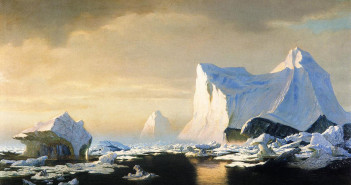
Letters william-bradford_icebergs-in-the-arctic
7

Like the kid (and the dad) in the Disneyland ad, I’m “too excited” to sleep. It’s a good feeling. Anticipation is one of the greater pleasures of love, travel, painting. Knowing that something exciting is going to happen, and more or less how, gives vitality. You set yourself up for it.

We all know the feeling when looking at a work-in-progress or even a blank canvas. You have an idea how the forms and spaces will evolve, how a look or a feel will be.
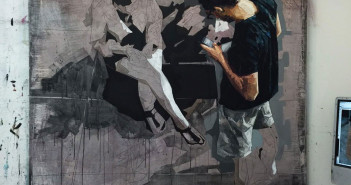
Letters Joshua-miels_work-in-progress
65

A subscriber who signed off as “Over The Hill Portrait Artist” wrote, “You must be one of those Millennials, they don’t think like we mature artists.”

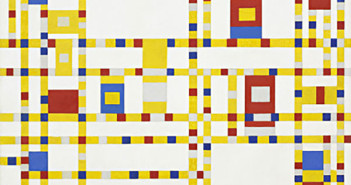
Thanks, O.T.H.P.A. Millennials are the generation born between 1980 and 2000. While this rules me out, 80 million are in America alone — the largest age group in history — and many are artists. In a recent article for Time magazine, Joel Stein describes a calm-looking anxious person checking a smart phone hourly and sending and receiving about 80 texts per day. This is apparently a kind of stress-reducing tick caused by

Letters piet-mondriaan_boogie
27

Just for a minute, don’t think of right- and left-brain thinking — think simply of thinking and not thinking. At your easel or workstation, think of “thinking-it-out” and “not-thinking-it-out.” Glimpse into your own brain while in the act of art — when you’re actually moving a brush or some other tool. Try to analyze this brain activity systematically at the start, in the middle, and towards the end of a piece of work. Every one of us manifests a different percentage of thinking and not thinking. It’s this percentage — and the changes of percentages — that makes our work interesting both to our selves and to others.

Letters egbert-oudendag_mount-baker
15

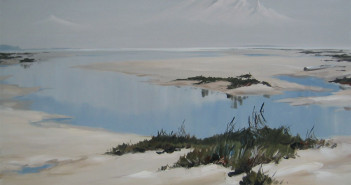
My late friend Bert Oudendag used to open his oil tubes from their back-ends, squeeze the contents onto a steel tabouret and carefully fold in 50% by volume of stand oil, a small amount of copal varnish and a drop of cobalt dryer. He then put the mixture back into its tube and put the remainder in a glass jar. All this was in aid of an extended and more fluid brush stroke that gave his work a kind of Franz Hals character. He was particular about his stroke.

Letters paul-cezanne_mont-sainte-victoire-and-chateau-noir
23

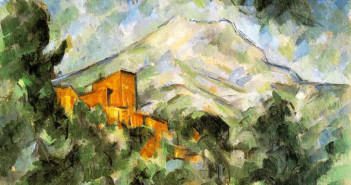
In the late twenties a young American artist and Cézanne enthusiast by the name of Erle Loran moved into Cézanne’s studio. For two years Erle wandered the countryside around Aix-en-Provence and photographed the scenes that the deceased artist had painted. The result was a remarkable and intelligent book. “Cézanne’s Composition,” now only in paperback, is a clear-headed artist’s analysis of what he thought was going on in Cézanne’s mind and, more importantly, what was going on in his pictures.

Letters jmw-turner_loch-coruisk
67

Louise and I left Glasgow after packing her digital piano, the Rhodes, the amp, the cables and the mixing deck into the back of her Vauxhall Corsa. We curled the off-ramp and headed north, the moorlands expanding around us in mounds of soft jade and broom. As time passed, our words awoke like an old engine — at first in little tumbles, then chugging with a warm hum. By late afternoon we’d crested the northwestern tip of Skye and arrived at a crofter’s house, now called Red Roof — a miniscule, chapel-like café with a pitched ceiling, a weaver’s guild, pottery studios, orbited by a flock of sheep. Artists’ spaces and holiday rentals sit hungry for future poets. I got out of the car and stood in the thousand-year-old wind.

Letters Michelangelo_Delphic-Sibyl(detail)
14

Do you ever wander back to that time when you first started thinking about making art? Do you ever think of the vision you first had — how your art would be made, its themes, its look? How simple it all was then. For some of us we thought it was just a matter of learning the skills and enacting our vision.

Then, with a little seasoning under our belts, we modified, changed, expanded, contracted — we grew. Or perhaps we regressed.

Letters 091914_alice-munro_portrait
53

I’m laptopping you from an airplane somewhere over the Atlantic, where I’ve been reading 29-year-old filmmaker Lena Dunham’s 2014 memoir, Not That Kind of Girl. Risking an evening of unsavoury navel gazing or too much of the wrong information, I find the book has instead revealed the tale of a human being unloading a poker-faced truth. “She simply tells her story as if it might be interesting,” wrote artist Miranda July of Lena’s work. I thought of painting.

shaver-artwork-leftbank_big
0

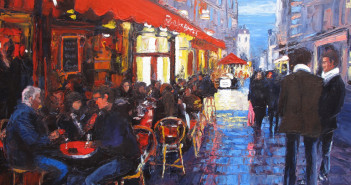
Sharon Rusch Shaver, is a professional artist living and working in the state of Tennessee…

Letters vangogh-bernard
103

There used to be a joint in the East Village of New York called the C-Note, where you could get a gig if nobody had heard of you. During your set, the bartender would pass a tip jar, and on a good night you could recoup the cost of your cab home. An ice machine would fire up at timed intervals with a hum, then burst like a firecracker, dumping ice into a metal bin. It flanked the stage and could be heard at all five tables and out the front door, serving as a finger-wag to your art-dues still-owing.

I played early and then packed up to get to another gig, while the next songwriter slid behind an electric piano. She was small, ginger-haired and wearing a cardigan, her eyelashes curled out like spiders perched on a pair of glossy rain puddles.

1 114 115 116 117 118 271