Search Results: g (2707)

Letters odjig_to-drop-the-mask-1980
42

This letter is a bit more difficult to write because it hits close to home. Apparently 15 percent of the general population are what psychologists now call “Highly Sensitive Persons,” or HSPs. Among creative types the percentage is much higher. In part, it’s the sensitivity that makes us creative. Carl Jung suggested that we are just introverted, shy or depressed. Recent research indicates that HSPs are genetically programmed to be that way. Getting rid of the condition would be like changing our eye colour. HSPs have valuable assets that have traditionally been given a bum rap by the not-so-sensitive majority.
Letters schenck_anguish
20

Recently, a subscriber wrote to ask about a letter he called, The 7 Habits of Highly Effective Artists. Sounding familiar, I took to the Painter’s Keys search bar tool, but came up short. A quick pass at Google gave me a seminar aimed at 3D computer graphics animators, and so I wondered, might it be time to take a closer look at the “habits?”

First published in 1989, Stephen R. Covey’s best-selling self-help manifesto The 7 Habits of Highly Effective People triumphs character over personality in the achievement of goals.

Letters e-j-hughes_abandoned-village-rivers-inlet_1947
24

Last weekend I attended an exhibition of the work of a wide range of painters. A lot of it was photo-derived — some of it really crackerjack — others not so hot. Why is it that some people can take photographic reference and make it exciting, while others only succeed in reproducing a photo?

A lot of it has to do with the analysis that an artist gives to the reference prior to picking up the brush. Here are a few ideas you might find useful

Letters rembrandt_artist-in-his-studio
12

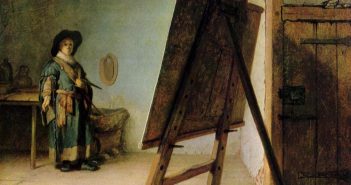
An artist who wishes to remain anonymous called to say he’d fallen out with his creative partner. As a result, he was bogged down with disappointment, bad blood and a logjam of paperwork needed to release a big idea, now begging for a clear-headed, singular captain. Apparently, this idea was special enough to be fought for, but mourning, reworking and cleansing it has drained his bank account and put a hold on other creative options, paralyzing his happiness and momentum. At the risk of simplifying his problem, I suggested he get to work right away on something else.

Letters marcelle-ferron_untitled2
10

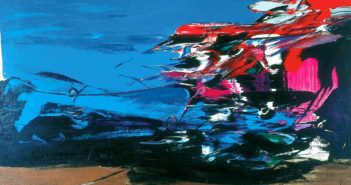
More than a few of us report that our first inspiration to pick up a brush was Les Automatistes of Quebec or Kandinsky and Der Blaue Reiter. Fast, intuitive strokes invite access to a spontaneous and visceral creative experience — an appealing prompt. Others first fell under the spell of the carefully planned masterworks of Neoclassicism, the incremental chiseling of a hunk of marble or the specific strategy required by conceptual art that leaves the end fabrication to a team of minions. This slower system, set in stages with rules and requiring concentration, focus, observation and accuracy, may have felt the most natural.

Letters amrita-sher-gil_brahmacharis-_1937
10

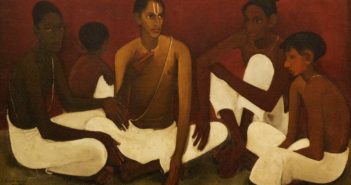
Good karma is a creative tool. By contrast, bad karma can interfere with your work, slow your progress and spoil your fun. Your words and deeds are your honour and your glory. Future power is needlessly given away every day by thoughtless moves and ignorant remarks. It’s sad to realize that most of the world’s evil begins with our mouths. Here are some karmic tips for artists:

SUNLIGHT AND SHADOWS
0

Fort Langley Artists Group Now in our 23rd year, the Fort Langley Artists Group (FLAG)…

Letters marc-chagall_the-painter-to-the-moon-1917
21

Among the new and old friends who came to Banff last Saturday was a burgeoning painter who told me about a recent switch from oil to acrylics. “Those acrylics, they dry too fast,” he said. “How do I get that stopped?” I glanced over his shoulder at a painting done by my dad while sitting in the sunbeam of a glacier not far from where we were standing. “At first, they dry too quickly,” I said. “With time you may find that they don’t dry quickly enough.”

Letters sara-genn-you-were-here-24x24inches_2017
20

I once took a turn as a sometimes player in a New York rock band. The leader, a long-haired, Gibson SG-wielding screamer who also studied Buddhist meditation, told me that in Rock ‘n Roll, making it clear about what you’re against rather than what you love is most effective. With this formula, rockers have successfully defined themselves. By kicking off a point of view, they have united, disrupted and inspired their audiences.

Letters james-hart_carving-ubc-recpole
26

“Everyone has a quest,” a friend once said when visiting the studio. “An artist’s quest is in her work.” I was pulling a number 50 super soft piano bright along the edge of a soaked grey cloud, beguiled for the millionth time by the twinkling and mysterious possibilities of painting. “Without the quest, there’s no epiphany,” I replied. The pursuit of truth, innovation, beauty, surprise, connection — to communicate, propel, report, witness, comfort — these are the timeless commands of art. By renouncing known routes to engage the ache for the ever-truer, the artist begins:

1 18 19 20 21 22 271