Search Results: g (2707)

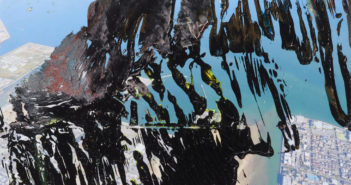
Letters Return of the Forest
30 x 40 inches
acrylic on canvas
by Robert Genn (1936-2014)
17

Artists need to be constantly on the prowl for ways to make their work more visually exciting. Art needs magic bullets beyond mere subject matter. Fact is, perfectly dull subjects can be made more interesting with a little extra thought and effort. You may already be applying some of these ideas, but if my request seems more like a tough order, perhaps these exercises will be all the more important for you.
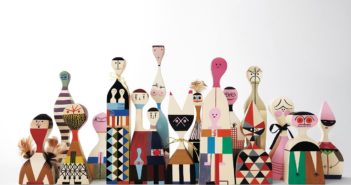

Letters Dolls
Solid pine wood, hand-painted with mixed media, including feathers, twine, etc.
Designed by Alexander Girard (1907-1993) and manufactured by Vitra
8

When Alexander Girard and his wife, Susan, moved to Santa Fe in 1953, they finally had room to properly display their massive collection of folk art. Mexican Day of the Dead papier mâché dolls, Japanese wooden kokeshi dolls, Hopi beadwork dolls, Eskimo miniature dolls dressed in sealskin parkas and every other kind of doll from every corner of the planet had served as inspiration to Girard’s career. As a textile designer for Herman Miller, furniture and industrial designer and what is now known as a “total concept brand identity designer” for restaurants, an airline, private homes, corporate offices and museum installations, Girard worked from the magic of colour, graphics and expressive, anthropomorphic forms to spark joy in his signature worlds.

Letters Ram's Head and White Hollyhock, New Mexico, 1935
oil on canvas
30 x 36 inches
by Georgia O'Keeffe (1887-1986)
20

One day at school, my art teachers Jenny and Carolynn gave me a book of paintings by Georgia O’Keeffe. I was 12 and O’Keeffe was 96, still living on a 31,000-acre ranch in New Mexico. I didn’t know this at the time, but it would be Georgia’s last year there after summering on the ranch and wintering in nearby Abiquiú for over 50 years and now having lost most of her vision to macular degeneration. She would pass away peacefully in Sante Fe two years later.

Letters 24.7.2015, 2015
Oil on color photograph
4 3/8 x 6 5/8 inches
by Gerhard Richter (b. 1932
13

Earlier this week, a person whose opinion I respect came into my studio and made some remarks about the surface quality of my paintings. While deeply encouraging, the following day I found myself longing to make my work better. Ways of refining an already technical process suddenly became apparent to me and, like a door opening to an unknown room in my house, the new idea expanded in discovery and play.

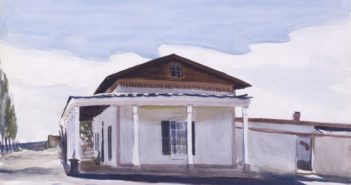
Letters Ranch House, Santa Fe, 1925
watercolor over pencil on paper
13 7/8 x 19 7/8 inches
by Edward Hopper (1882 - 1967)
12

Vicki Lynn Rae of Vancouver, BC wrote, “I have noticed from time to time subscribers have written with art related questions and now I have a situation that has me stumped. A few years ago a client bought from me two large paintings. One, an Orca, I had already painted and listed on my website. The other was a landscape commissioned to go along with the Orca. Recently, I received an email from this client saying he is having to downsize and wishes to sell the Orca painting. He asked me to handle the sale.

Letters The Enchanted Owl, 1960
Stonecut on paper
Printer: Eegyvudiuk Pootoogook
60.9 x 66 cm
by Kenojuak Ashevak (1927-2013)
11

If painting is like navigating, you might want to put down your phone. Neuroscientists at the University College London scanned the brains of London cabbies and discovered that the volume of their hippocamps — the part responsible for spatial memory, visualization and narrative — was larger than average. As possessors of “The Knowledge” — knowing by heart over 320 routes, 25,000 streets and 20,000 landmarks — London cabbies are said to have had an atlas of the city transplanted into their brains. The magic is that “The Knowledge,” unlike a smart phone algorithm offering every driver the same directions, allows the cabbie to create novel routes based on a mastery of experience and to retrace, tweak and embellish these routes over time.

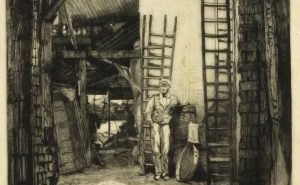
Letters The Lime Burner, London, 1859
Drypoint etching
55.6 X 40.5 cm
by James Abbott McNeill Whistler (1834-1903)
32

A subscriber wrote, “I’m spring cleaning. Sketches, old matted drawings, paintings that aren’t my best, oil studies, unimportant works, etc., have finally found themselves in a big pile. Some, if properly matted and framed, could sell. The problem is that I don’t want to invest in the time, energy or frames. Would slipping them into poly bags with backing be appropriate to move this stuff? Right now, I feel like throwing them into the dumpster, but I have been told not to do so. What do you do with your studies and sketches? What do you think of having a fire-sale?”

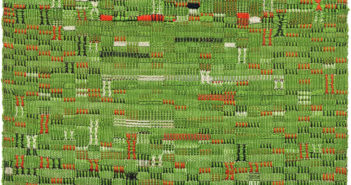
Letters Pasture (1958) 
cotton, 394 x 356mm
by Anni Albers (1899-1994)
39

Recently, I received an email from an Italian contemporary furniture brand. Sandwiched between complimentary remarks about my work, they requested I send some paintings to Venice for an upcoming photo shoot. “We guarantee you a lot of visibility, your credit will be printed on the catalogue and we will share with you the hi res pics. Also we will tag you in every social media platform where your artworks will be.” They signed off by dangling the names of their photographer and stylist and telling me to let them know if I was “in.”

Letters Getting started on Ramparts, February 2004.
8

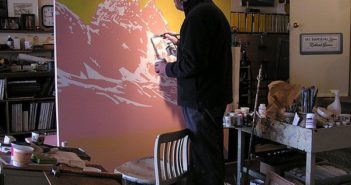
When I was a boy my dad owned a sign shop. There were four employees: Nort, Mort, Phil and Bert. Each had their specialty — show cards, banners, silkscreen, illustration. It seems my dad was always walking around and asking, “Do you have something to get on with?” Dad lived in fear that one or the other would run out of something to do.

Letters sara genn lake ohara
18

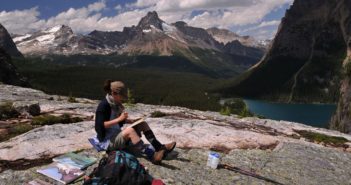
My daughter, Sara, and I are again up to Lake O’Hara and Yoho National Park in British Columbia. Today, in the champagne air of a place known as “The Hanging Gardens of Babylon,” both of us are struggling with extra-large canvases. We’ve come this high with a little help from our friends, and we’re talking about “strong and wrong.” It’s a term currently used by some of Sara’s New York musician friends. Apparently it’s better to blow a strong note off key than to produce a wimpy one that doesn’t get noticed.

1 10 11 12 13 14 271