Search Results: g (2707)

Letters gaston_the-young-artist
17

A recently retired schoolteacher shared her career-long response to students complaining of boredom: “Only boring people are bored.” I strained to think of an artist who had ever complained of being bored. I wondered: Are artists innately gifted with a love of time? Are they anointed with savvier powers to daydream, to reflect, to be curious, inventive, doodling and self-reliant? Do they possess a diminished need for pastimes and entertainment? How did they get here? Are artists born not bored?
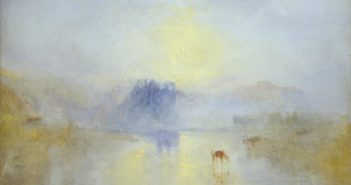
Letters Norham Castle, Sunrise c.1845 Joseph Mallord William Turner 1775-1851 Accepted by the nation as part of the Turner Bequest 1856 http://www.tate.org.uk/art/work/N01981
10

Depending on your point of view, he was either one of the world’s most important painters, or the original amateur. J. M. W. Turner (1775-1851) influenced many artists, particularly the impressionists. (Monet and Pissarro were knocked over by his work) His paintings of luminous vapour have etched their way into the popular imagination.

One magic day years ago I stood in front of the real stuff at the Tate in London. Ever since then I’ve been wired for Turner — both the artist and the art. I always feel I owe him a visit.

Letters jeh-macdonald_mist-fantasy_sketch_c-1922
43

Liz Reday of Southern California wrote, “What do you do with all the extra art? Especially after fifty years of painting? How do I build a storage shed that will adequately protect the paintings and get them out of my now cluttered studio? Yes, I intend to destroy a number of the unfortunate unsuccessful ones (note I don’t call them “dogs”) but we can’t burn outside here in Southern California. Is a raised wood deck archival for storing paintings or is it better to have a concrete slab? Do your readers have any suggestions?”

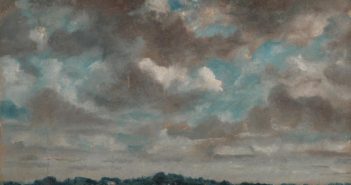
Letters constable_extensive-landscape-w-grey-clouds
7

These days the wind blows on this island from the northwest, fluttering hard the worldwide flags of the beach-cottagers. Clouds form over the distant coastal ranges, building among the highest peaks. Then they move out into the great gulf and rise to pass overhead. Effortlessly they form and reform. They have their early character and their late. In the morning: blue-gray, transparent, understated. In the evening: warm, purpled, energetic, dramatic. These clouds present the perennial quandary: Do I redesign them to suit a composition — to add control and solidity to the work? Or do I go with the arbitrary mystery of the vapour — the magic of hiding and transformation?

Letters h-r-giger_1
5

In July 1977, a broke and couch-surfing screenwriter was sparked to action by a book of paintings by a Swiss surrealist. He called the artist in Zurich and invited him to work on some concepts in Hollywood. The artist, an insomniac who suffered from night terrors, was also afraid of flying, so they agreed instead on England, where for 11 months the artist lived above a pub in Shepperton, Surrey. There, he built a prototype out of Rolls Royce parts and reptile vertebrae, working only from a brief sent in the form of a letter from Los Angeles

Letters john-olsen_sydney-harbour_2016
14

Near Sydney’s Circular Quay, a set of stone steps wanders through the historic foundations of Australia’s first European settlers. Here, convicts and pioneers of 1788 erected new lives amid gum trees and sandstone. “The Rocks” or “Tallawoladah,” as the Aboriginal Cadigal people called it, swirls today with ice cream lickers and city slickers, though its colonial past still pokes from behind the doorways of its remaining terrace houses. Across from the cutting-edge Museum of Contemporary Art and its Aboriginal masterworks nods the dusty entrance to the Julian Ashton Art School.

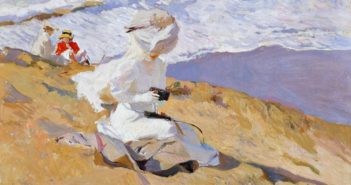
Letters sorolla_capturing-the-moment
13

Every few days someone asks me to send a personalized checklist of things they need to do and think about while they’re painting. As everyone’s creative concept is really quite different, this is a tough order. Even though I may have looked at the work, their continued flourishing depends on a unique vision and a sense of individual entitlement. We are all specialists of some sort, and specialization demands we make our own checklists. In our game there’s no silver bullet, no one size fits all.

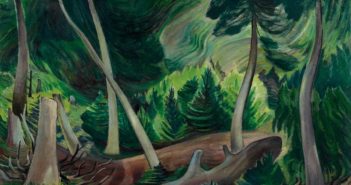
Letters emily-carr_forest-painting
11

Near where I live there passes an ancient pathway called the Semiahmoo Trail. It was first used by native peoples — the Semiahmoos — then by gold seekers, and later — not much more than a hundred years ago — by the first settlers in our area. Much of it has now been overtaken by urban sprawl. Some sections have been designated a heritage trail, bike path or nature walk. In some places it calls for a strong heart — small posts mark kilometers and encourage citizens to use it to increase their heartbeat.

Letters maud-lewis_three-black-cats
35

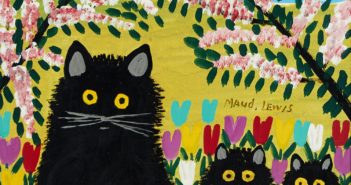
As a little girl in South Ohio, Nova Scotia, Maud Dowley suffered from juvenile rheumatoid arthritis, which kept her small, with almost no chin and other physical differences. She spent her childhood at home with her parents and brother, and when her mother encouraged her to make hand-painted Christmas cards, Maud found that she could fashion a world of her own and depict the abundance of rural life.

Letters vincent-van-gogh_boats-on-the-beach-at-saintes-maries_1888
15

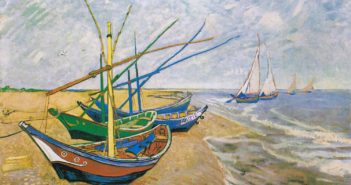
“If you want to be an artist — try being artistic.” This deceptively minor slip of info was given to me by a fellow painter, Maurice Golleau, somewhere in Provence many years ago. I’ve come to realize that it’s the life breath of our business. In other words, don’t just paint the boat, paint the most expressive boaty-boat you can drag out of your reference or your imagination.

How to do that? Here are a few ideas to think about and perhaps apply to your own subject or style:

1 139 140 141 142 143 271