Search Results: g (2707)

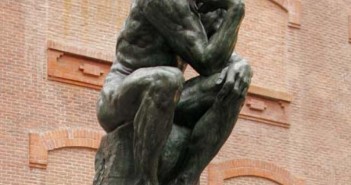
Letters rodin
11

Back in the home studio with my faster computer I’m doing some of those personality inventory tests on line. According to the “Keirsey Temperament Sorter,” for example, I’m what they call an “Idealist Champion.” This gives me an idea of who I am, where I’m happiest, what sort of a mate I ought to have, etc. What I really want to know is what I’m good for. To put it with a little less humility — am I a genius?

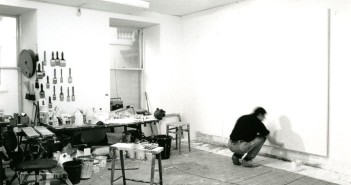
Letters callum-innes_in-studio
26

I’ve never been fully able to put my finger on what it is — but I’m going to try again. For those of you who might know more about it, I’d really like to hear from you. I hate to admit it, but it’s actually a bit of a mystery. I’m talking about “the groove.”

I got onto the subject again today because I found myself in a bit of a panic. Shows coming up, so many things to do, so many projects to which I had optimistically said yes. I knew in my heart to slow down and take my measured time, to live in the paint

Letters christoforos-asimis_voreina
11

Around Cycladic archeological sites, in the museums and even the sunscreen shops, are small and large figurines chiseled from local marble. They have the look of the Moderns — smooth and stylized, with blank, polished faces. The locals call them Kouros, or “man” — a term now used for all male figures in Greek sculpture. Near the village of Apollonas you can scramble up a rocky bank where an 11-metre-long marble Kouros lies across the hillside overlooking the sea at the edge of the quarry from which it came. He’s thought to be a statue of Dionysus — the god of wine — abandoned mid-chisel around 600 B.C.

Letters Anders-Zorn_Emma-Zorn
27

My friend and fellow artist Joe Blodgett devised a system he calls “The 14 Golden Stations.” At the time he was concerned with procrastination and time wasting — conditions that attack some artists. It works this way: You need a clock or a watch with an hourly chime. On the hour changes — generally from 8am to 9pm — you make a one-word note in a journal accounting for what you catch yourself doing. For yesterday mine looked like this: Walking, emailing, painting, painting, varnishing, driving, dreaming, planning, painting, painting, reading, snoozing, painting, painting.

Letters linds-redding
16

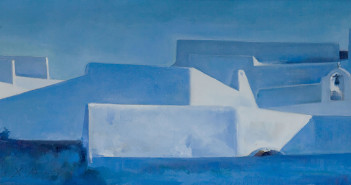
The Cycladic island of Naxos is dotted with white, cube-shaped houses clumped along the hillside in spaced, diminishing line-ups or stacked in a town labyrinth, an ever-narrowing grid climbing to a cloudless, cerulean sky. The edges are hard and soft with flat, angular shadows creeping across the summer walls in warm and cool greys. Balance and function make room for eye-stretches, patterning and design glee. I’m a rubbernecker on the back of the quad bike, grabbing at shapes and inhaling feelings for future art meals.

Letters dorothea-lange_white-angel-breadline
25

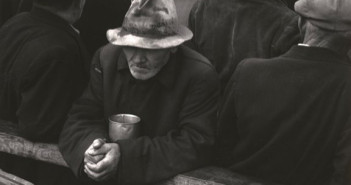
In 1918, photographer’s apprentice Dorothea Lange set out from her home in New York City to travel the world with a friend. In San Francisco she was robbed, forcing her to abandon her plans and work as a photo finisher. Within a year Lange had established her own busy portrait studio in downtown San Francisco — she was twenty-three — but with the onset of the Great Depression, something happened. “The discrepancy between what I was working on in my portrait frames and what was going on in the street was more than I could assimilate,” said Lange. “I set myself a big problem. I would go down there… to see if I could grab a hunk of lightning.”

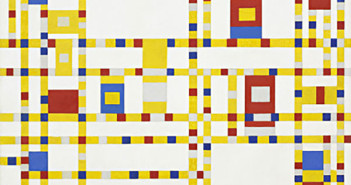
Letters piet-mondriaan_boogie
27

Just for a minute, don’t think of right- and left-brain thinking — think simply of thinking and not thinking. At your easel or workstation, think of “thinking-it-out” and “not-thinking-it-out.” Glimpse into your own brain while in the act of art — when you’re actually moving a brush or some other tool. Try to analyze this brain activity systematically at the start, in the middle, and towards the end of a piece of work. Every one of us manifests a different percentage of thinking and not thinking. It’s this percentage — and the changes of percentages — that makes our work interesting both to our selves and to others.

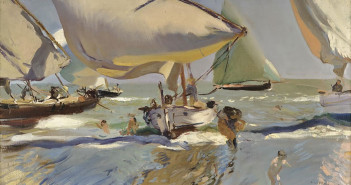
Letters sorolla_boats-on-the-beach-1909
45

A subscriber who wishes to remain anonymous wrote, “I can’t help wanting to begin again. It was in the beginning that I had the most fun, but now that I’m a professional with an audience and known style I’m not sure how.”

Thanks, Anonymous. Your email arrived while I was tying a bowline for an 80-year-old sailing captain. He watched from under a black wool fisherman’s cap, his eyes calm and crinkling upward. Not yet a sailor, I fed the line through and under itself, while a kind of mental untying occurred inside —  a smooth pridelessness — and I surrendered to my vast unknowns.

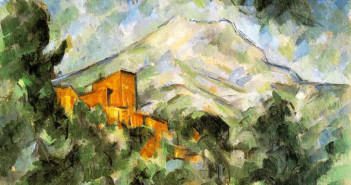
Letters paul-cezanne_mont-sainte-victoire-and-chateau-noir
23

In the late twenties a young American artist and Cézanne enthusiast by the name of Erle Loran moved into Cézanne’s studio. For two years Erle wandered the countryside around Aix-en-Provence and photographed the scenes that the deceased artist had painted. The result was a remarkable and intelligent book. “Cézanne’s Composition,” now only in paperback, is a clear-headed artist’s analysis of what he thought was going on in Cézanne’s mind and, more importantly, what was going on in his pictures.

1 25 26 27 28 29 271