Search Results: g (2707)

Letters mary-pratt_eggs
27

Artists write to say that they can do it one day and not the next. Simple as the problem may sound, it has always been a great curiosity to me. Some time ago I invented a method called “IAEAS.” It sounds Zeus-like, like a Greek god, and in a way it is. It stands for the “I’m An Extraordinary Artist System.” Before you turn me in, let me explain:
Letters georgia-o-keeffe_in-he-patio-no-iv_1948
22

“There is no such thing as an amateur artist as different from a professional artist,” wrote Paul Cezanne, “There is only good art and bad art.” And so a better question might be, “How can I make my work more professional?” Besides the game changers of working every day, using quality materials and being vigilantly unafraid to trash stuff that doesn’t measure up, professionalism emerges through refinement and intimacy developed over the course of a thousand conversations with your process. You might even say that when it comes, you’ll recognize it immediately.

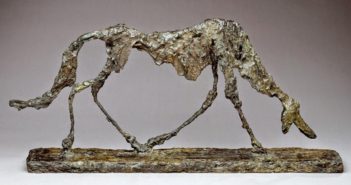
Letters alberto-giacometti_dog
14

A subscriber wrote to say that many artists proclaim themselves to be “self-taught.” She cannot imagine that anyone is truly self-taught. She says, “I have learned from books, art exhibits, life, relationships, observations, and conversations with all sorts of people. I hear all comments and criticisms around me. I chew on them. I’m nourished by the ones that I decide work for me and spit out the others.”

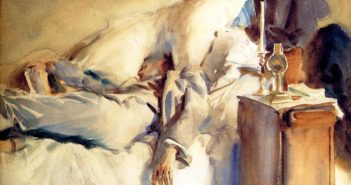
Letters js-sargent_peter-harrison-asleep
10

Here’s an exercise that you might try the next time you’re having a bout of creative constipation. I’ll relate it to painting but it works as well if you’re sculpting or writing a short story. It goes like this:

Make a painting that looks like it was done in five minutes, but take at least two hours to do it. Go seriously to work at making the thing and the job look casual and easy. Give it flourish and spin. Get the gestures right with freedom and paucity.

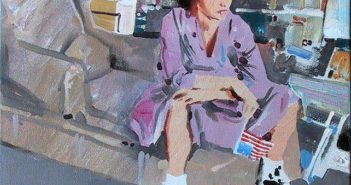
Letters robert-genn_melissa
23

Every time one of my letters disappears from this box, mail comes back with topic suggestions. I really appreciate these ideas. One of the most frequently requested is “procrastination” — a subject of which I’m proud to be an authority. Just as it takes a somewhat recovered alcoholic to stand up in an AA meeting, I’m your guy.

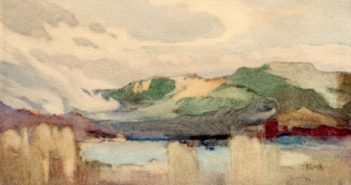
Letters charles-john-collings_painting
13

Innovation is a branch of invention that makes changes in existing systems. These changes need not be dramatic. They may not even be seen as improvements. In the art game they need only to be different.

Yesterday, while I was looking into the innards of a public gallery, the work of Charles John Collings (1848-1931) caught my attention. Collings was well trained in English watercolour methodology. Immigrating to Canada in 1910 at age 61, he spent his last twenty years honing a unique style.

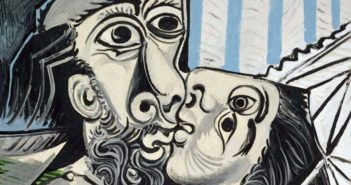
Letters pablo-picasso_the-kiss
21

When IBM surveyed the world’s CEOs on how to thrive in business, technology, health and every other industry, the results almost unanimously pointed to one determining factor. More than rigor, management, strategy, integrity or even vision, creativity came out as the top skill. Less than half of senior leaders believe their businesses are equipped for an increasingly complex and volatile global economy, and their proposed solution is to bump up the value of imagination. Part of this plan is to set up projects like “skunkworks” — innovation theorist Everett Rogers’ term for a free-association think-tank on company time. The problem is that committees, by their nature, tend to kill ingenuity in favour of what’s comfortable. And what’s comfortable is usually what’s most familiar. In advertising, it’s called “status quo bias,” and brands rely on it to keep their customers coming back for the mediocre.

Letters fritz-scholder_hopi-dancers_1974
8

A mile above the California desert in the San Jacinto Mountains nestles a sleepy hamlet populated almost entirely with artists. It began in 1946, when choral conductor and dean of the University of Southern California’s music department, Max Krone, and his wife, Bee, purchased 250 acres in the San Bernardino backcountry with the idea of building a remote satellite arts campus. Believing that arts education enhances human development, within four years they opened their fledgling summer school with forty students and eight instructors and called it Idyllwild.

Letters lawren-harris_isolation-peak-rocky-mountains_1930
10

The way I look at it, a work of art requires the presence of two spirits. The first is the spirit of the subject matter — the object or thing that the work is based on — Nature’s spirit. The second is the spirit or interpretation the artist brings to the object — the unique style or manner that only the individual artist can give. Subject matter alone — the slavish copying of nature — does not make art. But art also falls short, in my opinion, when it doesn’t lean to some degree on the stimuli of place or subject.

1 140 141 142 143 144 271