Post-traumatic growth
Dear Artist, Beneath a cloud of awareness that people are suffering because of COVID-19, artists…

Dear Artist, Beneath a cloud of awareness that people are suffering because of COVID-19, artists…
Ever since I was a kid I’ve been interested in the nature of creative thinking. Where does it come from? Can it be learned? Can it be taught? I’ve been curious about my own periods of creative intuition and creative ineptitude. I’ve also been interested in the difference between “wild child” creativity and mature creative self-management.
Most of our creativity takes place in the right back corner of our brains. In addition, many folks are able to toss the creative ball both fore and aft and port and starboard.
While taking a turn in the garden yesterday, I discovered the tiny, pricked egg of a song sparrow in the grass. Too small to have been made by the chick, the pinhole must have come from another, predator bird in search of a smoothie. “Hopefully his siblings had success,” said a friend, when I sent her the image. With all of us in our individual rooms, the now all-day polyphony of happy birds in the garden tells me she’s right.
Some artists report periods of general anxiety that come and go during their careers. The condition may include heart palpitations, sleeplessness, panic attacks, depression and feelings of inadequacy. While some of these are just part of living, they can also be brought on by the insecure and sometimes difficult nature of the artist’s life. There’s that nagging fear that work is not coming up to expectations. There can be fear of change as well as fear of stagnation. Fact is that shadowy fears and tensions can block creativity, interfere with productivity, and drag down quality.
Dear Artist, Yesterday, Kelly Borsheim of Cedar Creek, Texas, wrote, “I’ve been struggling with a…
When I was a teenager I read a book by a hugely successful baseball player. He hadn’t always been successful, though. Early in his career, reporters referred to him as “poky” and “slow off the mark.” While he was talented and capable, he was on his way to the bush leagues when he saw the light. He got the idea that if he just started jumping around and looking active, he might build enthusiasm and proficiency. Reporters started saying he had “ants in his pants,” calling him “Fireball,” etc. Fact is, his game improved when he started jumping around.
In his latest book, A New Earth: Awakening to Your Life’s Purpose, Eckhart Tolle discusses how the human mind is almost constantly engaged in private thoughts. These inner rumblings reflect our personal trials, dreams, needs and obligations. To function properly as a creative person, an artist must divorce himself from some of this clutter and begin a process of rebirth into another mode. “Even though people may travel,” says Eckhart Tolle, “they tend to remain where they have always been — in their head.”
A recent study published by the National Academies of Sciences, Engineering, and Medicine has reframed the vulnerabilities of the risk-taking, reward-seeking brains of adolescents. Now, it seems, those teenage brains are actually powerhouses of creativity. After all, we can’t develop new ideas or build skill without taking chances. Innovation requires a near-absence of caution — once considered a weakness in young people, but something scholars now believe could be a teen’s greatest creative strength.
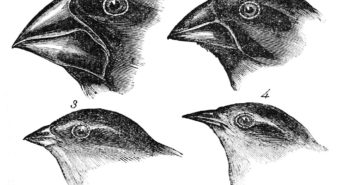
English Economist Tim Harford defines creative growth as taking ideas from their original context and applying them elsewhere. Like cross training, he says, it inoculates our creative muscles against hitting a plateau. To avoid getting stuck, just change the subject. Here are a few ideas:
Organize your studio and surrounding areas like a Montessori classroom — with stations geared towards different projects you can flutter to and from. When work slows or you hit an obstacle, move to another station and pick up where you left off.
This morning Pamela Haddock of Sylva, NC, wrote, “Our art association is in a quandary. One of the requirements of our well-attended and successful group shows is that all work has to be original, with no reproductions. We make an exception for photographers. Now some of our painting members want to keep and enjoy their own originals and are busy making giclees. They want to show and sell them. Some club members don’t want this. I can’t see what the fuss is about — it seems they’re reproductions just like photos. What do you think about having prints among our originals?”