Search Results: m (2712)

Letters Self-portrait, 2017
Flashe on canvas
48 inches
by GIovanni Garcia-Fenech (b. 1967)
18

Last Sunday, in a shock of re-entry, two visitors came to the studio — the first in six weeks. They arrived at the door wearing masks, and we introduced ourselves for the first time with what felt like both a momentous and unsatisfying wave, from six-feet apart. I resisted the urge to embrace them properly. I did my best to show them what their presence meant to me. My visitors seemed weary of the protocol and sat down amongst the paintings I’d been working on at my new, yogi-like pace. We discussed the immediate future of the art world before talking about painting. Our visit was tinged with a calm and realism about the unknowns that face our special ecosystem. After an hour, we thanked each other and they got into their cars and drove away.
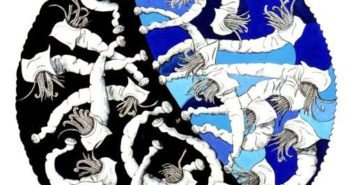
Letters Xenobalanus
illustration 
by Anne Adams (1940-2007)
24

Ever since I was a kid I’ve been interested in the nature of creative thinking. Where does it come from? Can it be learned? Can it be taught? I’ve been curious about my own periods of creative intuition and creative ineptitude. I’ve also been interested in the difference between “wild child” creativity and mature creative self-management.

Most of our creativity takes place in the right back corner of our brains. In addition, many folks are able to toss the creative ball both fore and aft and port and starboard.

Letters Rouge Triomphant (Triumphant Red), 1959-1965
Sheet metal, rod, and paint
110 × 230 × 180 inches
by Alexander Calder (1898-1976)
5

When I was a teenager I read a book by a hugely successful baseball player. He hadn’t always been successful, though. Early in his career, reporters referred to him as “poky” and “slow off the mark.” While he was talented and capable, he was on his way to the bush leagues when he saw the light. He got the idea that if he just started jumping around and looking active, he might build enthusiasm and proficiency. Reporters started saying he had “ants in his pants,” calling him “Fireball,” etc. Fact is, his game improved when he started jumping around.

Letters You are not alone, you have this artwork for company, 2017
Linocut on paper
15 2/5 × 11 2/5 in
by David Shrigley
1

Last week, on the same day the Governor of California issued a statewide “stay at home” order, our neighbourhood small-batch ice creamery launched an online payment system and let locals know they could pick up pints, curbside. This small business, which is run by artists, had already begun posting daily flavours on social media. It was a natural evolution made real by a changing-world urgency. Like ice cream, art should be small-batch, experiential and on hand in a crisis.

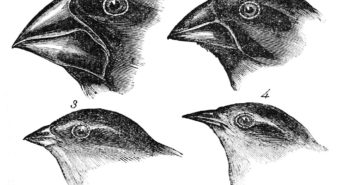
Letters Darwin's Finches: Large ground finch, Medium ground finch
Small tree finch, Green warbler-finch
by John Gould (1804-1881)
18

English Economist Tim Harford defines creative growth as taking ideas from their original context and applying them elsewhere. Like cross training, he says, it inoculates our creative muscles against hitting a plateau. To avoid getting stuck, just change the subject. Here are a few ideas:

Organize your studio and surrounding areas like a Montessori classroom — with stations geared towards different projects you can flutter to and from. When work slows or you hit an obstacle, move to another station and pick up where you left off.

Letters Storm Over the Serpentine, Nicomeckl Estuary, 2013
acrylic on canvas
11 x 14 inches
by Robert Genn
37

A subscriber wrote, “I have recently been given an assignment by a mentor to paint, without restraint, 20 or so small abstract pieces that express the emotions of an illness I have been managing for years. I find myself stuck, stuck, choked with fear…emotion. I find myself not knowing how to visualize, begin to ‘show,’ express emotion. Usually it seems that feeling or emotion just shows up. To invite, command the same has me stuck. Does one just begin?”

Letters A Dash for the Timber, 1889
oil on canvas
by Frederic S. Remington (1861-1909)
12

In 1872, businessman, racehorse enthusiast and former governor of California, Leland Stanford, commissioned photographer Eadweard Muybridge to prove a theory about a horse’s gait. Until then, equine painters, including Western painters, had been depicting horses at a trot with one foot on the ground and in a gallop with all four legs sticking out — like a hobbyhorse. Muybridge set up 12 cameras and photographed Standford’s own Standardbred trotter, Occident, trotting. Amongst the 12 frames was a single, groundbreaking photographic negative showing Occident with all four feet off the ground.

1 8 9 10 11 12 272